
Introduction
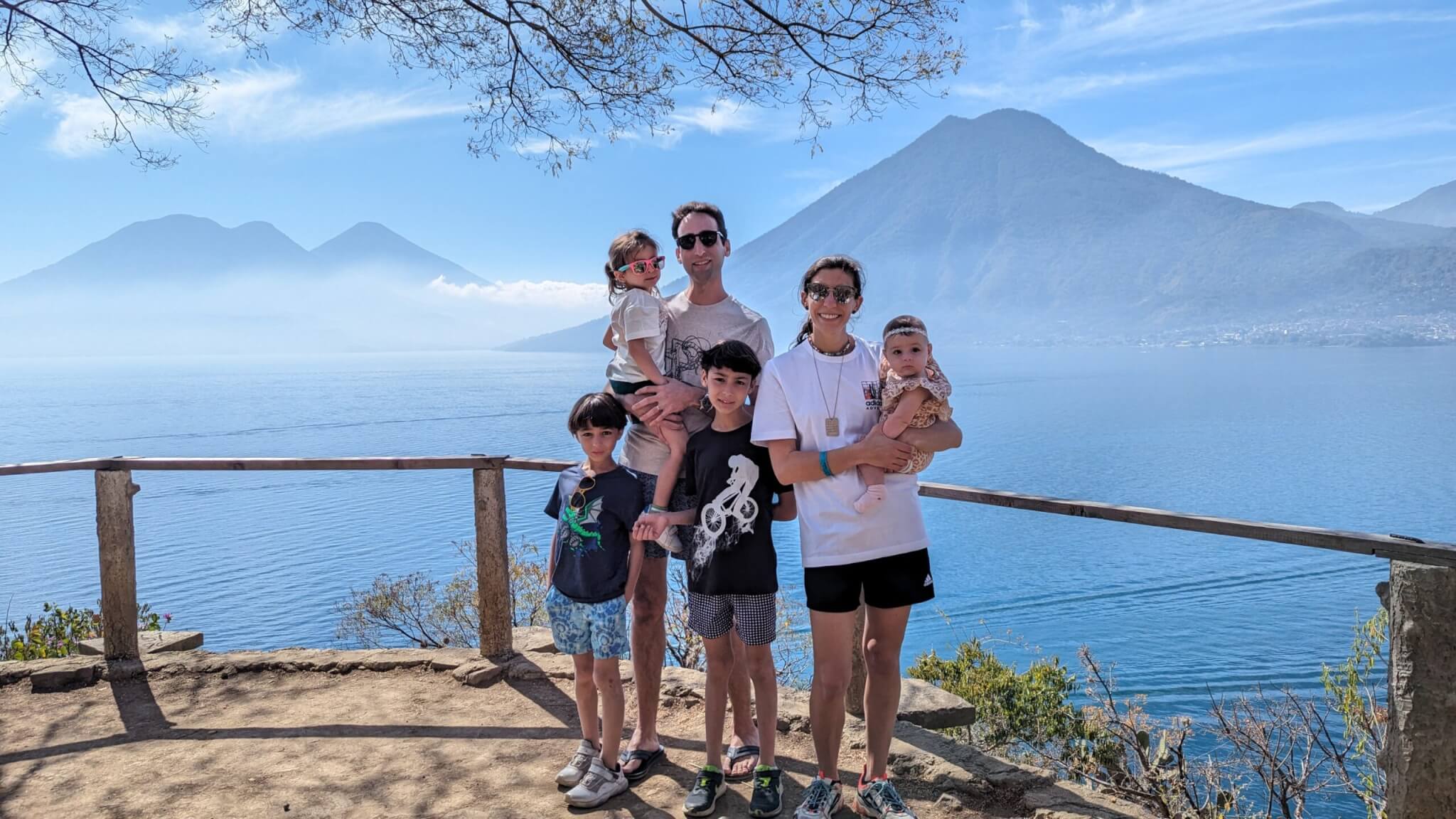
Winter Break 2024 – where should we go? When we first started thinking about it in the summer, we knew that we would have a 7 month old with us. Rita didn’t think a beach / resort vacation would be the most enjoyable, and was more interested in Europe since it would be easy to move around with Sharon in the stroller. Then, October 7th happened and Europe was a no-go. Also, Rita started to think that we would appreciate somewhere with a warmer climate. For a few weeks she considered Panama. However, it seemed that to do it correctly, we would have to fly across the country, which would be difficult with 4 young children. After a Google Explore search, we found cheap tickets to Guatemala. Rita is a fan of the Facebook group Jewish Girls Travel Forum and remembered that they had great reviews of Guatemala and Instagram stories from Busy in Brooklyn and others. We introduced the idea to Viviane and Zeke and they were interested – especially Zeke who saw it as an opportunity to relive his backpacking days. Once Rita got over her fear of encountering plenty of stray dogs, we booked the trip and began to plan. We decided to stay in Antigua first and then head to Lake Atitlan for a few days. Sam decided that we should stay in Pana because it offered the most direct route by car from Antigua and to the airport in Guatemala City. The trip was a lot of fun with many thrilling activities for everyone in our group. In one word, it was certainly a chavaya!
Antigua de Guatemala
Friday
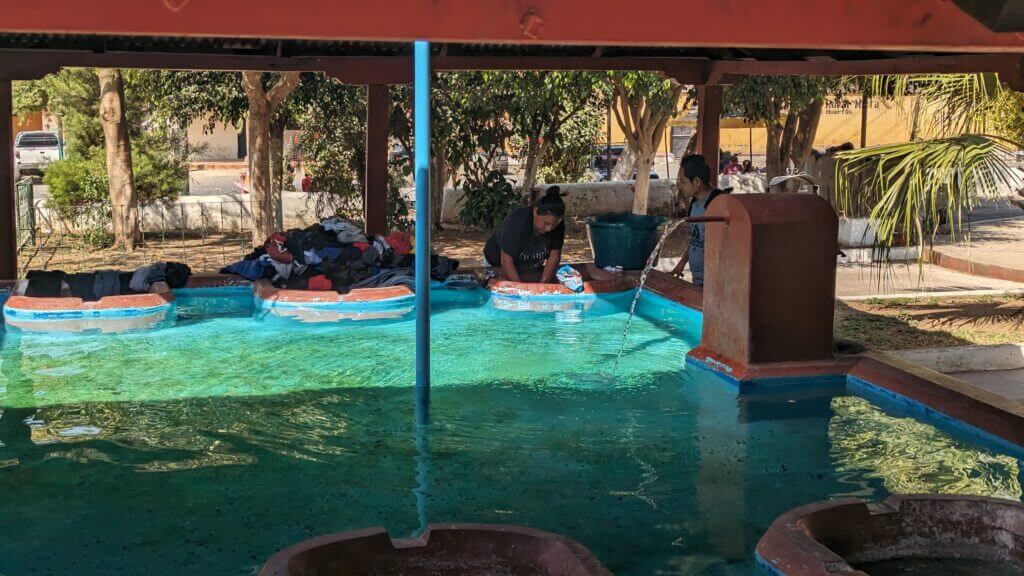
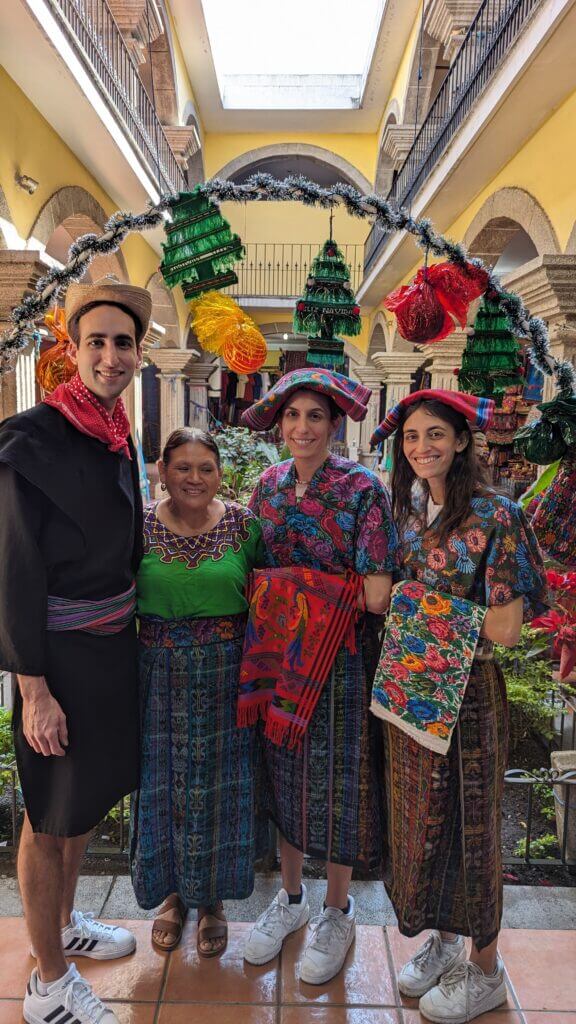
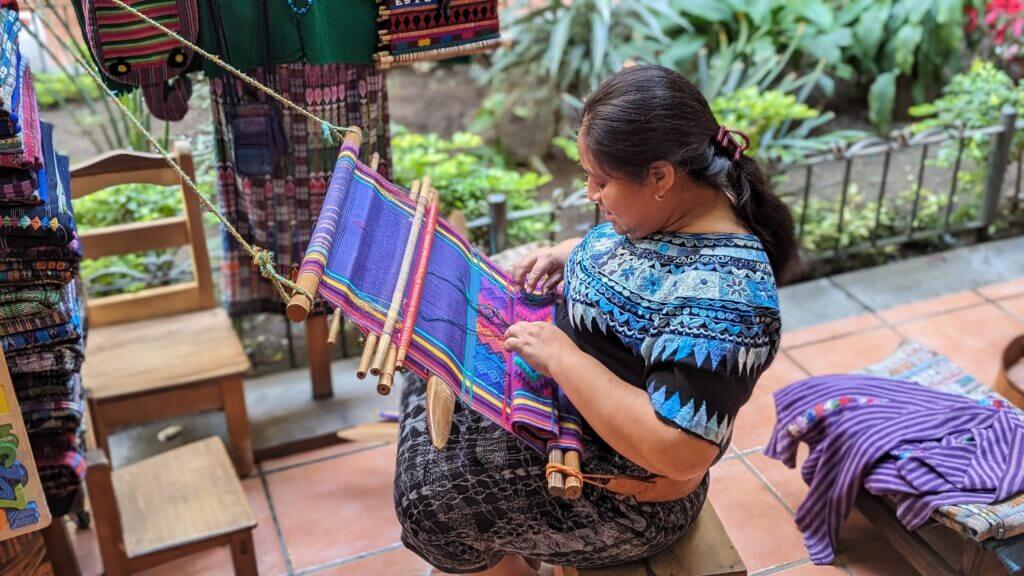
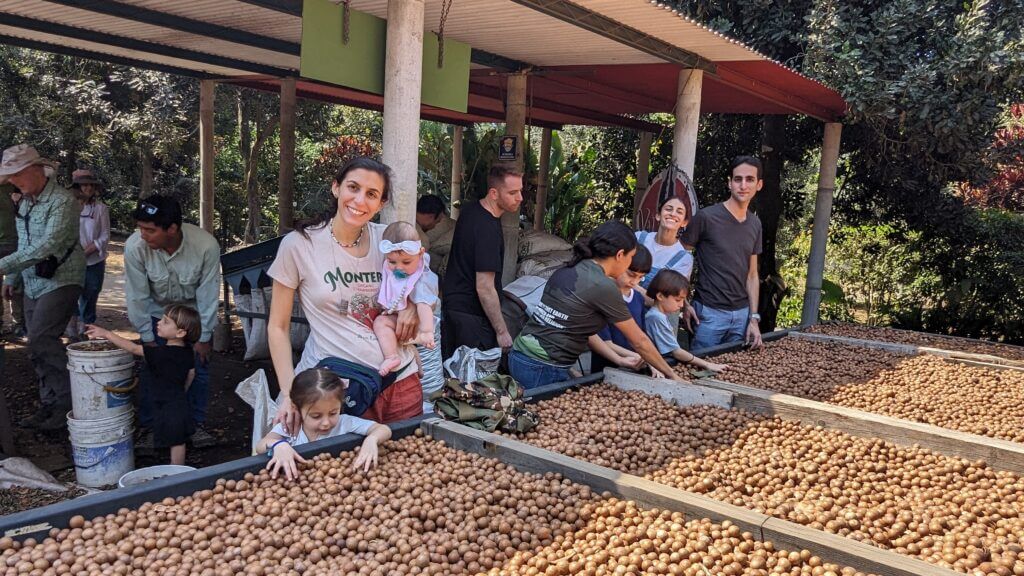
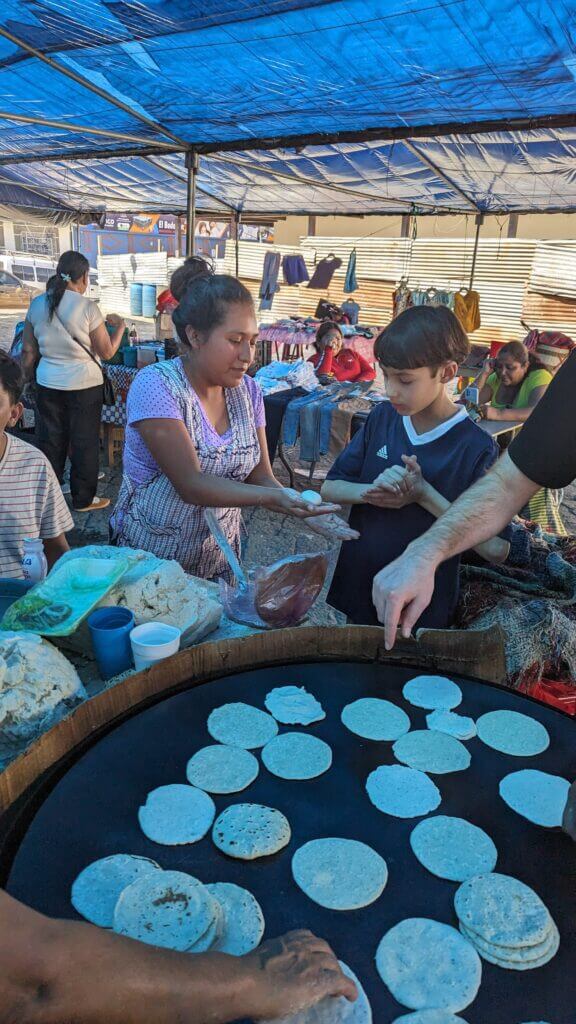
Pueblito Tour – We spent the morning visiting traditional villages around Antigua. We began in San Antonio Aguas Calientes at a traditional Mayan weaving cooperative, where we watched our first demonstration of a ceremonial Mayan weaving. We learned about the different garments that women and men wear for their wedding ceremonies and beyond. We then went to Valhalla Macadamia Farm, where we learned the process of how macadamia nuts are grown. The nuts grow on trees and are ready for preparing once they fall to the ground. First, the outer green shell is removed from the nut. The farmers used a tire to shell them; it was cool. Rita was also intrigued by the sorting machine that separated the nuts by size, but Sam said that this is nothing new. Once the hard outer shell is removed, the macadamia plant is set to dry. When you can shake the nut and hear the inside moving, it is ready for the next shell to be removed. At this point, the nut is ready to be eaten. The macadamia nut has myriad uses. There was also a restaurant with many foods made from the macadamia nut, including macadamia ice cream and pie. They were delicious! We then visited the Ciudad Vieja to see the local market and make tortillas with some women who were amazed that Allen knew how to work a tortilla press. We also visited a jade factory in San Pedro Las Huertas, and saw the local women doing laundry in a communal water basin in the town square.
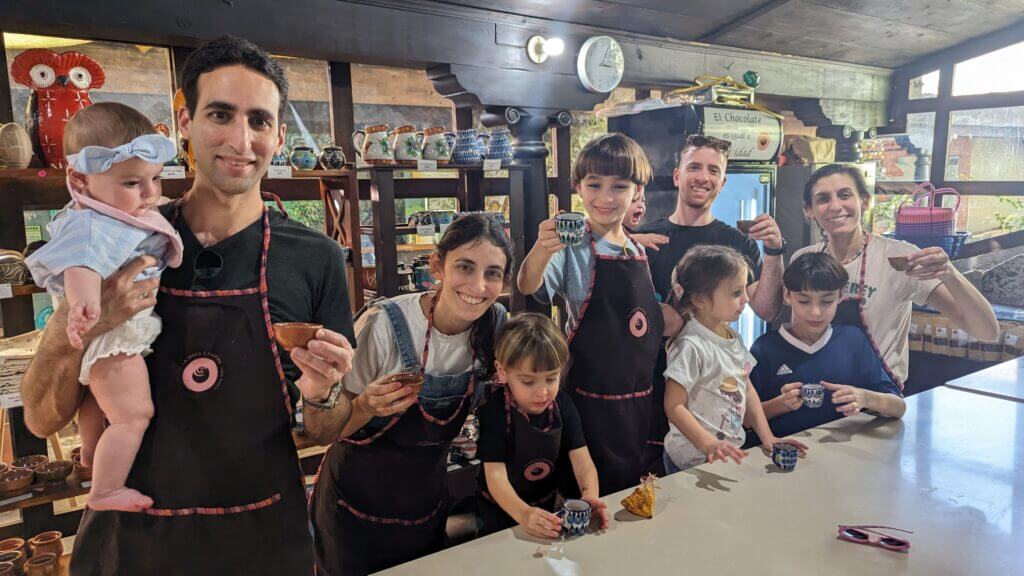
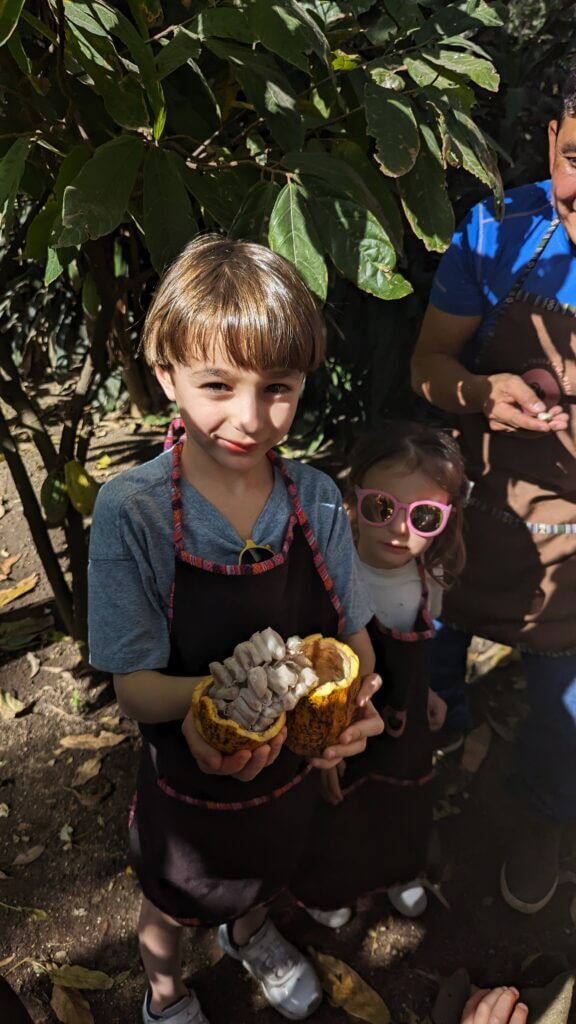
Chocolate Making Class at Finca La Azotea – In the afternoon, we headed over to Finca La Azotea (Finca basically means estate or plantation). We did a chocolate making class, where we first made some molds out of already melted chocolate. Once we were done, we learned how chocolate is harvested from the Cacao tree as we opened up a fresh fruit and tasted it. We then learned how the beans are fermented, we roasted some, shelled them by hand, re-roasted the beans and ground them. It was a really cool and involved process that made us appreciate how much work goes into it.
Shabbat
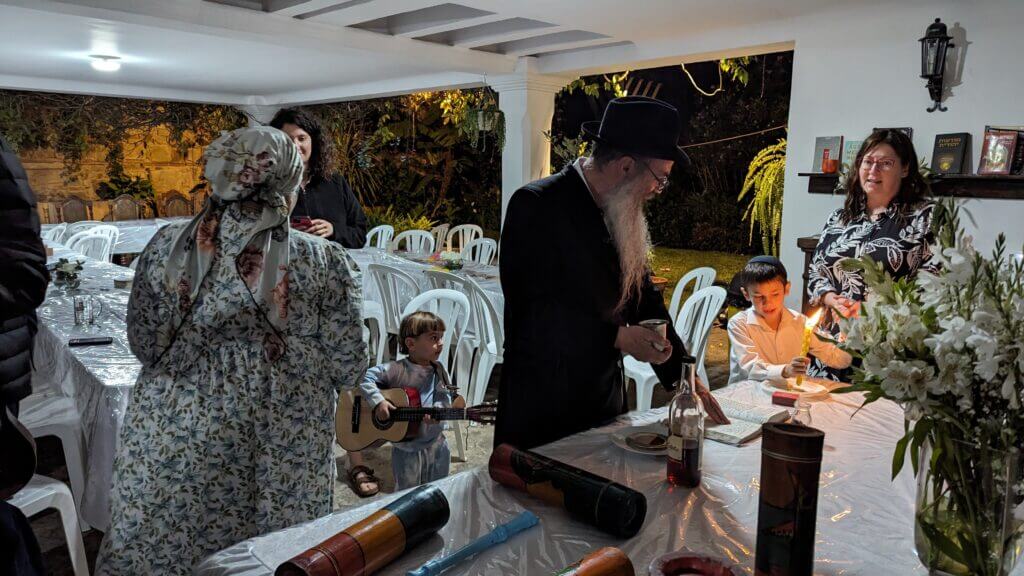
Shabbat was spent at the Chabad house in Antigua. This Chabad was really warm and welcoming. Rebbe Chaim and his wife Daria were awesome, and they really loved the kids – especially our nephew Steven. As we were actually staying in Chabad, it was so easy to have all our meals there, and let the kids sleep as they were ready. The Chabad house is an old plantation home, with a huge inner courtyard with bedrooms all around. We ate in the courtyard which was very pleasant, and the food prepared by Daria in her Moroccan tradition was delicious. Allen especially liked the Moroccan fish, and a Chabad Antigua specialty – Challah-peño. Shul services were extremely late, so we took the opportunity to walk to Caoba Farm where the kids played on the playground and saw some of the animals at outside the Farm to Table restaurant. Shabbat ended with a beautiful musical Havdalah.
Sunday
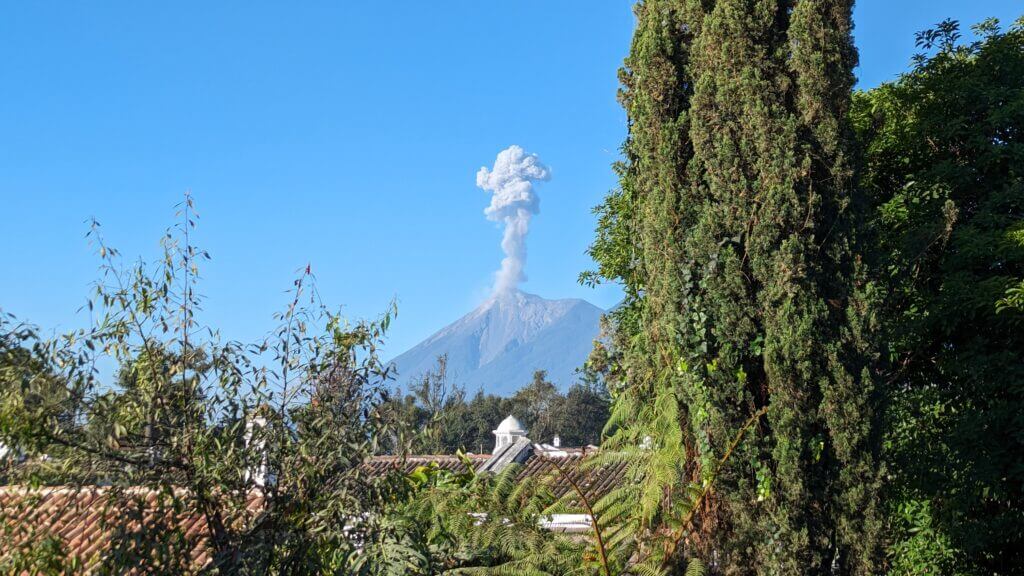
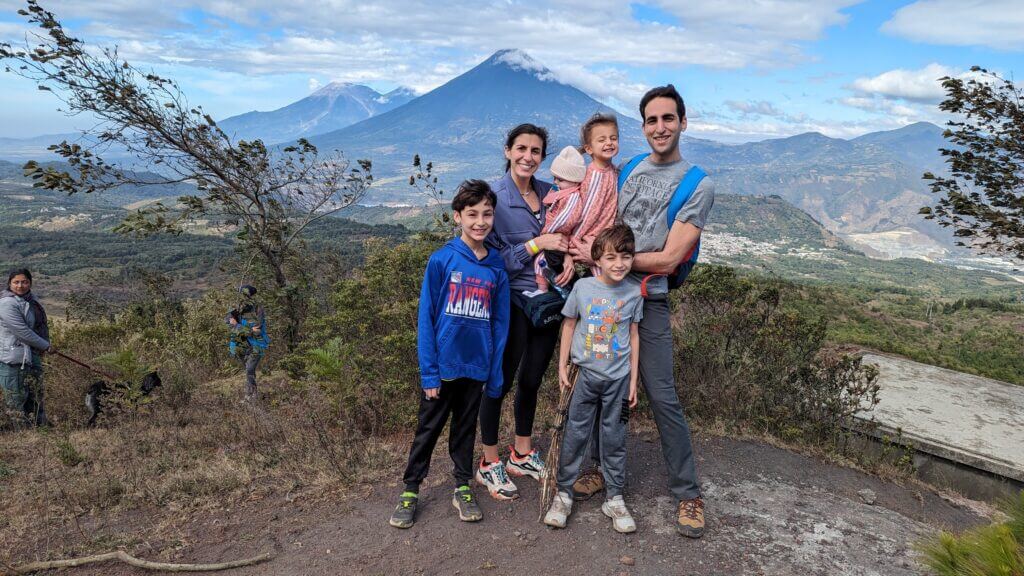
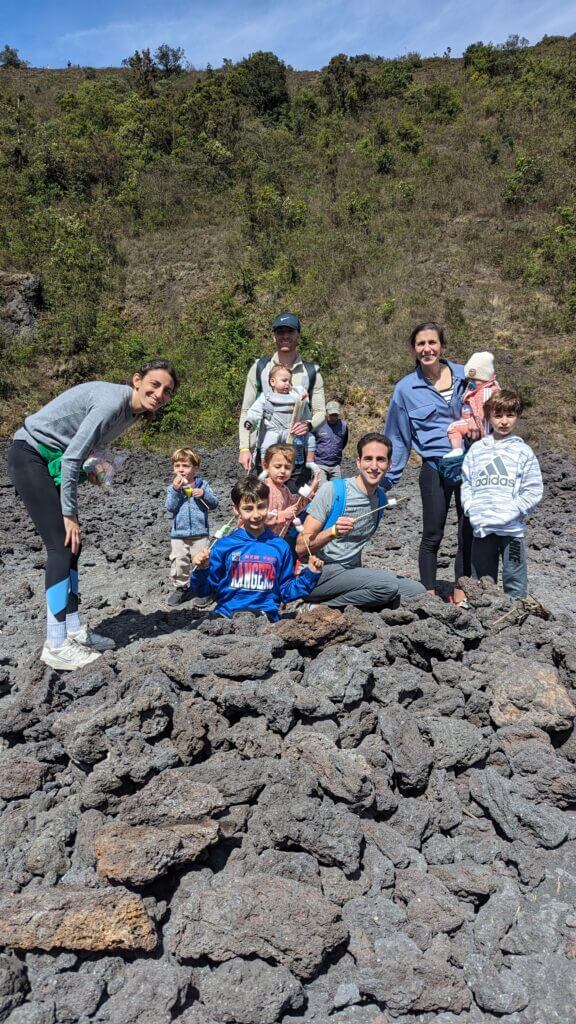
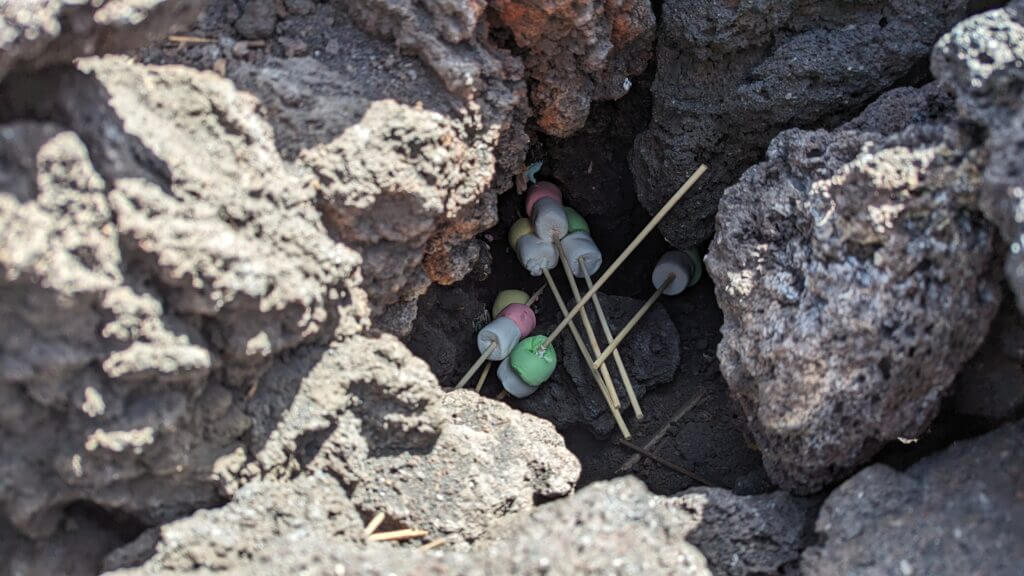
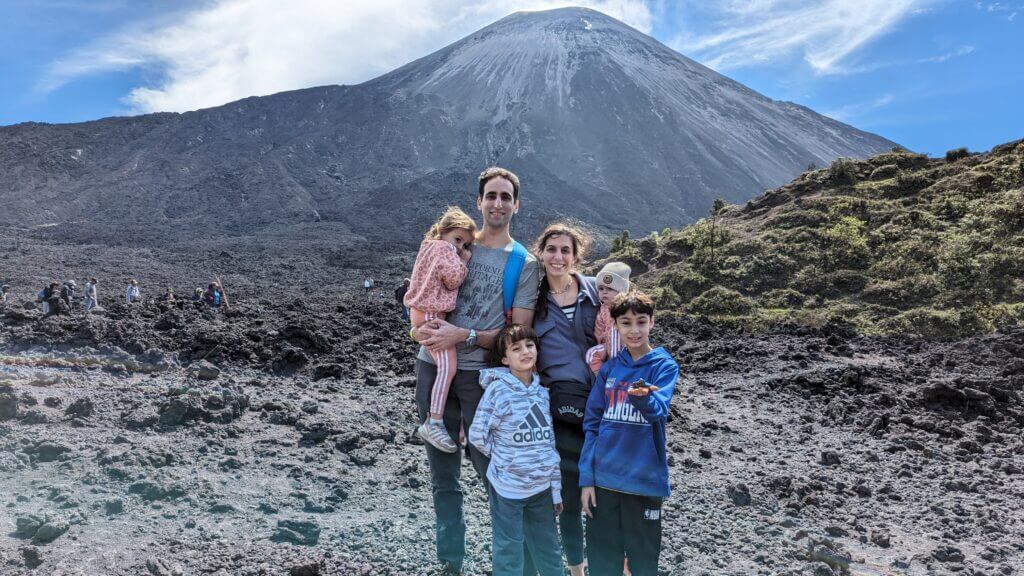
Pacaya Volcano – We started off the day at the Pacaya volcano hike. Most people who come to Antigua do the overnight hike at Acatenango, but we felt that was too ambitious with 6 kids ages 8 and under. So, we opted for the shorter hike at Pacaya, where we read that you can roast marshmallows on the steam from the active volcano. The reality of the hike was not as glamorous. For most of the way up, our tour guide, Alejandro, carried Sharon. Zeke was a true champ and carried Joseph AND Steven. Our assistant tour guide / babysitter walked with Shelly while Sam, Viviane, and Rita took turns watching over all the kids and intervening as necessary. For example, 1/3 of the way through we decided Sharon needed to eat and 3/4 of the way through, Sam rocked her to sleep. The hike was advertised as 45 minutes, but in reality it took us an hour and a half to climb up the steep volcano and make our way to the steam pots. The kids enjoyed it, but struggled a bit on the way up. Once we got to the top, we took some pictures in front of the gorgeous views of the volcano and roasted our marshmallows. You had to stick the marshmallows on a stick and leave them to cook in the steam pot for 2-3 minutes before they were gooey and soft. After a nice sugar break, we started the climb down. The Franco kids finally kicked into gear and had a much easier time going down than up. We all felt very accomplished and exhausted at the end!!
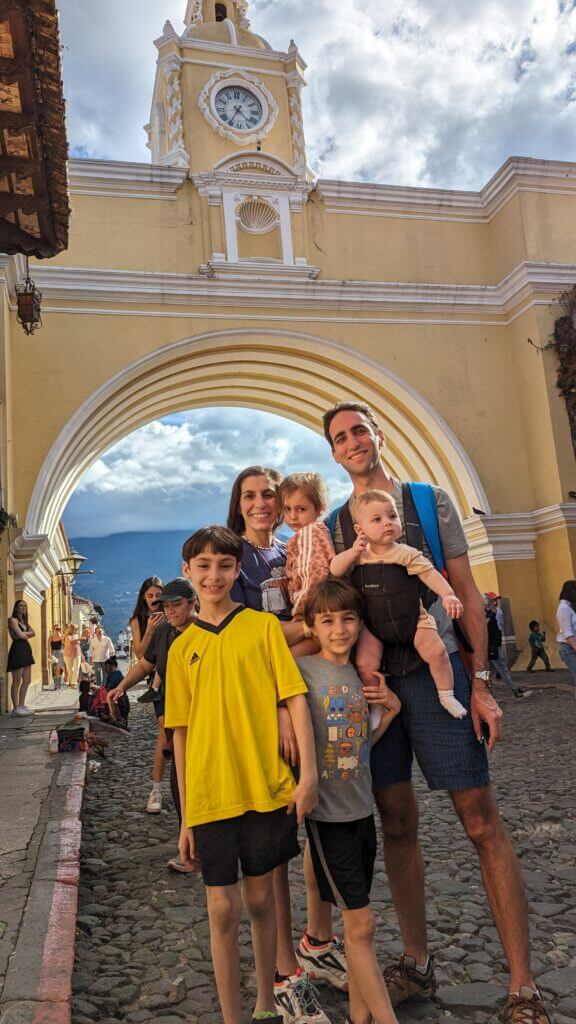
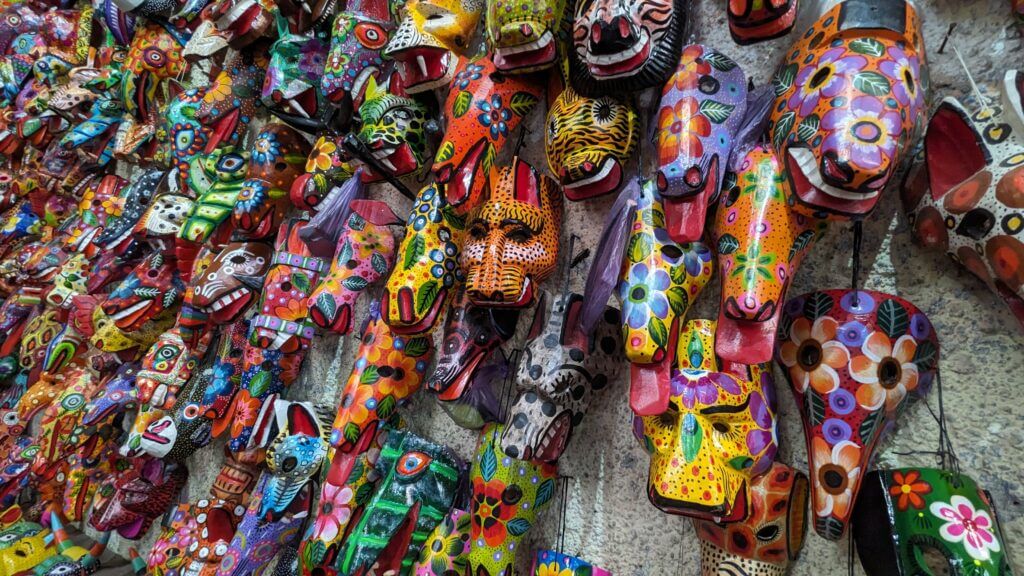
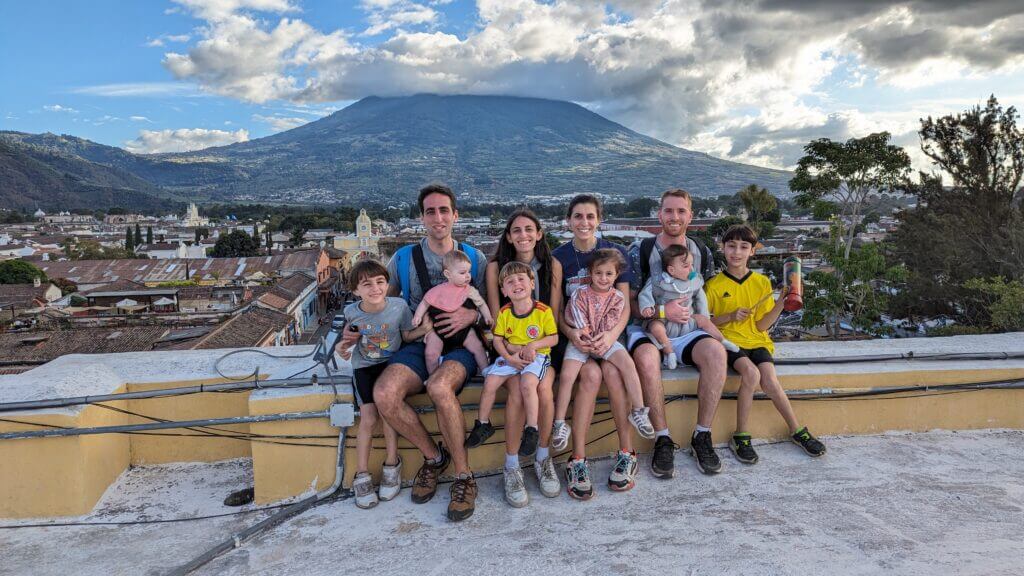
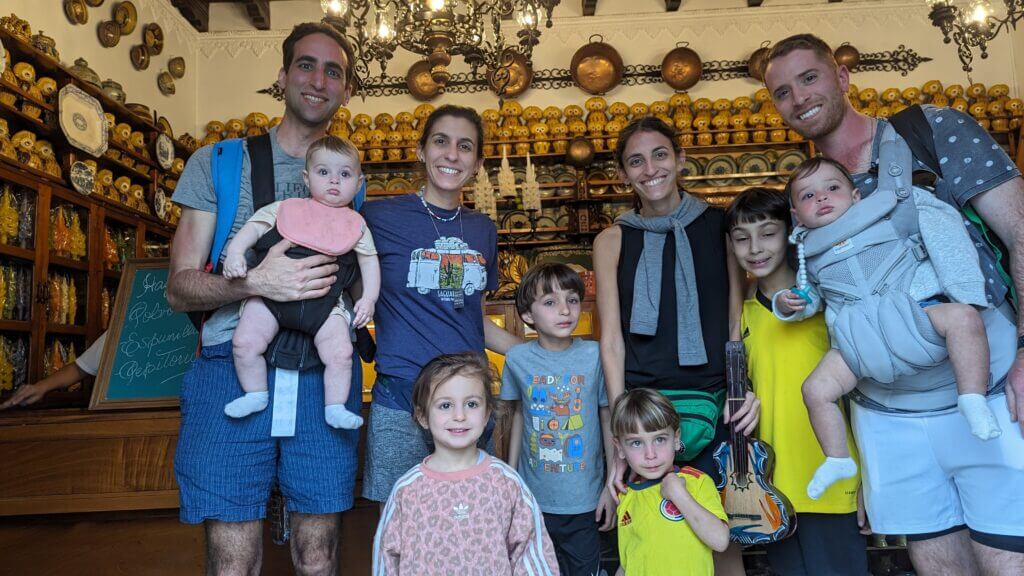
Antigua City Tour – After our long morning, we refueled with deli sandwiches and dropped our stuff off at the hotel. We then went on a walking tour of Antigua. Our first stop was the Art Museum (MUNAG – Museo Nacional de Arte de Guatemala), which arranged various pieces of art from colonial times to contemporary times. Guatemala was the seat of the Mayan Kingdom, then a Spanish colony and became independence in 1821.) We passed through the Central Park and made our way towards the famous Arch of Santa Catalina. Afterwards, we stopped at the Nim P’ot marketplace, which was a large store with thousands of (mostly handmade) items. Next we stopped at La Merced Church to see the beautiful lookout from the roof. Afterwards, we went to another handicraft market in the old ruins of El Carmen. This one was organized in many stalls with individual owners. Lastly we stopped at a really cool traditional family candy shop called Dona Maria Gordillo for some traditional Guatemalan sweets before walking back to Chabad for dinner.
Monday
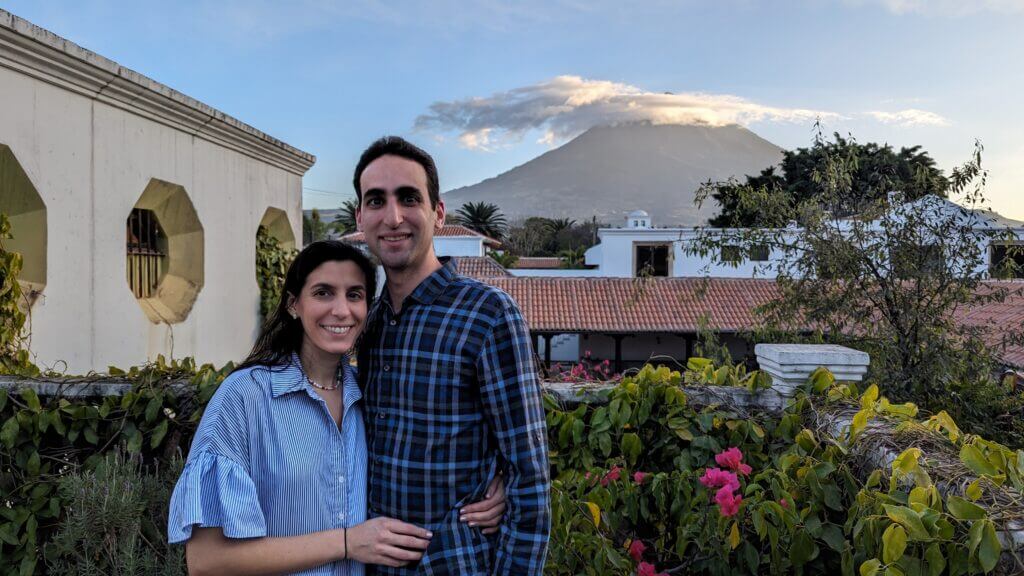
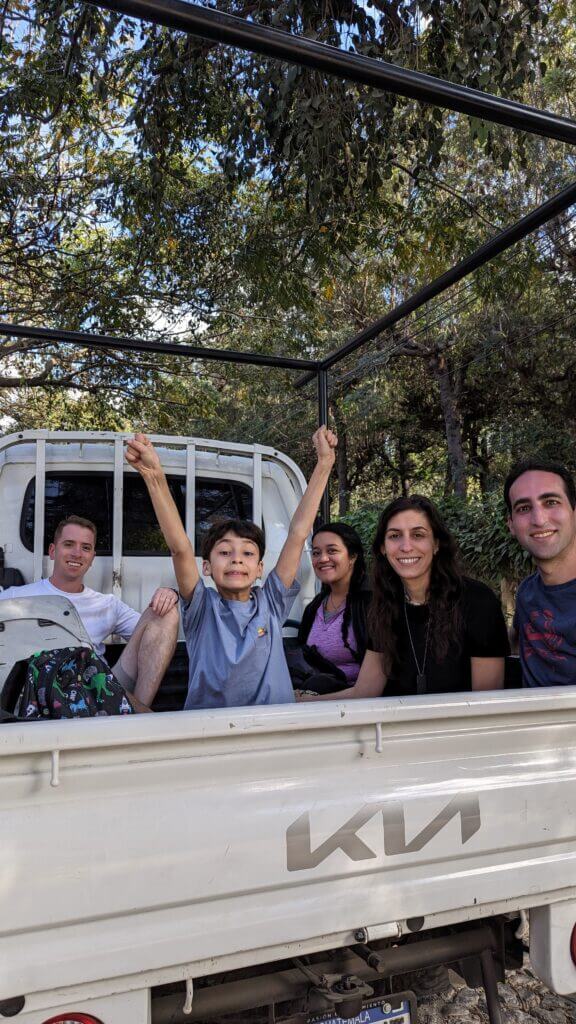
Cerro de la Cruz – Our journey began in a pickup truck. When Alejandro told us that we would be using a pickup truck, we really weren’t sure what to expect. Viviane sat in the car part with all the kids and the adults plus Allen sat in the back of the truck, exposed to the outdoors. Our first stop was at Cerra de la Cruz, which offered us gorgeous views of Antigua and the Agua Volcano.
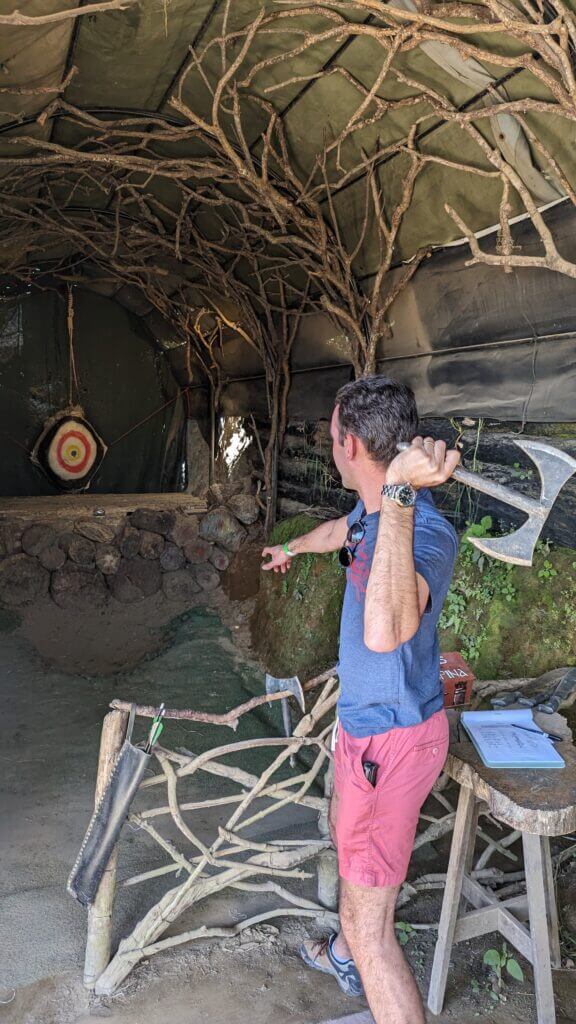
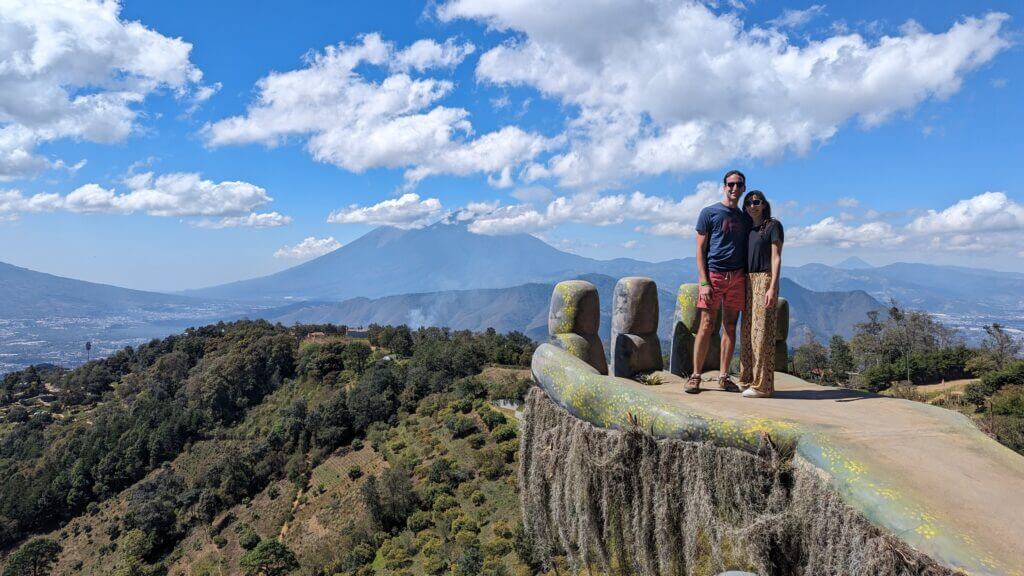
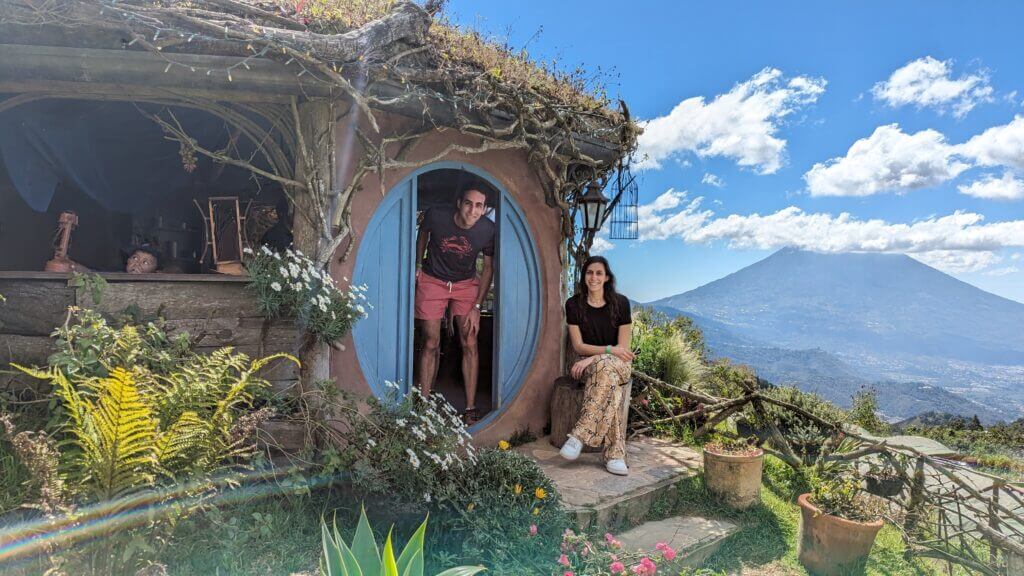
Hobbitenango – We then continued up a steep, bumpy road to Hobbitenango, a hobbit inspired park. There were several buildings modeled after the book. We took some beautiful pictures, including the famous hand in the sky. We tried axe throwing, bow and arrow and knife throwing. It was a really cool place and we could have spent even more time here, but Alejandro was rushing us to the next place.
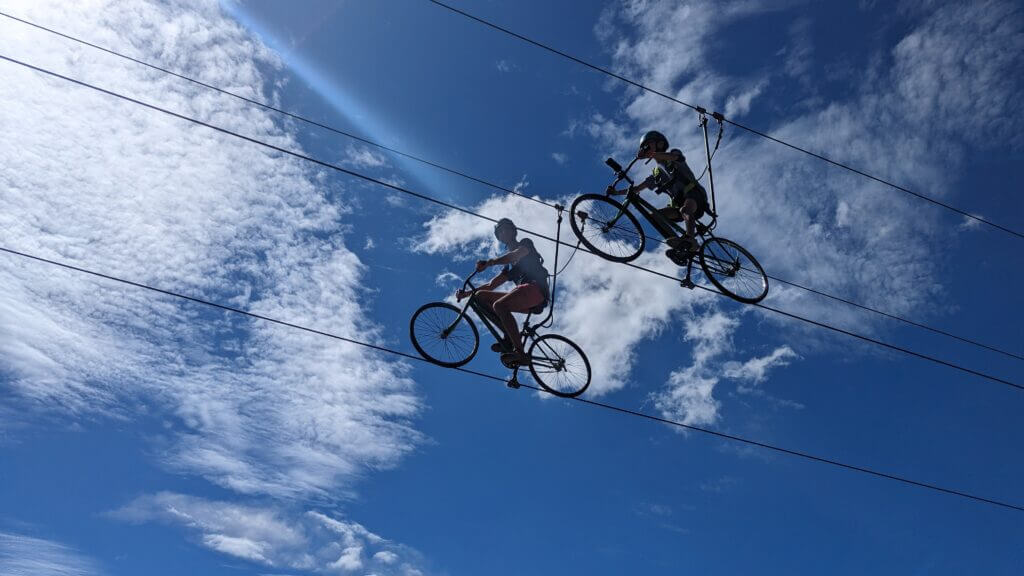
Altamira – We then went to Altamira, another photo op places, with more daring sculptures to pose on. There we did bicycle ziplining, where we biked in the air from one part of the park to the other. The boys enjoyed it and it was a very cool experience. Again, we could have spent more time here, but we hurried through to get to the next spot.
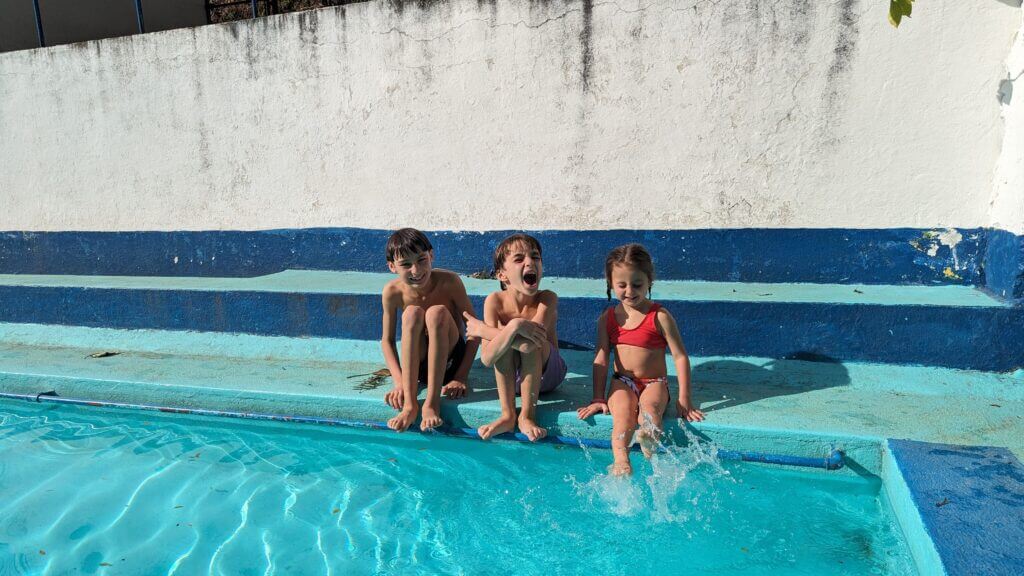
Finca el Pilar – Once back in Antigua, we had to switch out of the pickup truck and into our regular car. We headed to El Pilar, which is supposed to be a huge ecological park with swimming pools. For some reason, we only saw the pools, but all the kids and Sam and Zeke enjoyed the chance to cool off in the cold waters. The kids spent some time at the metal playground before we headed back to the hotel.
Lake Atitlán
Tuesday – On to Pana
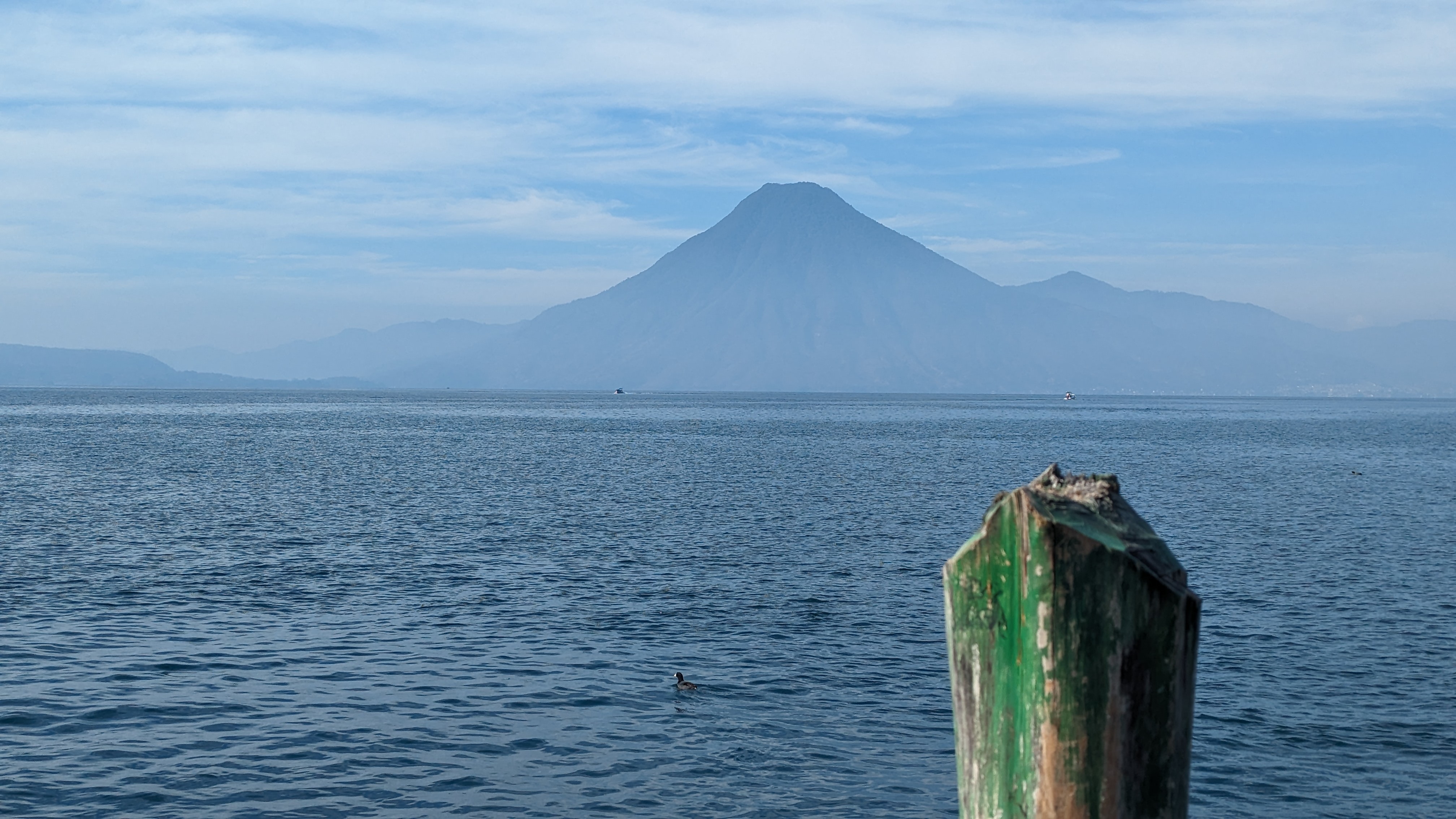
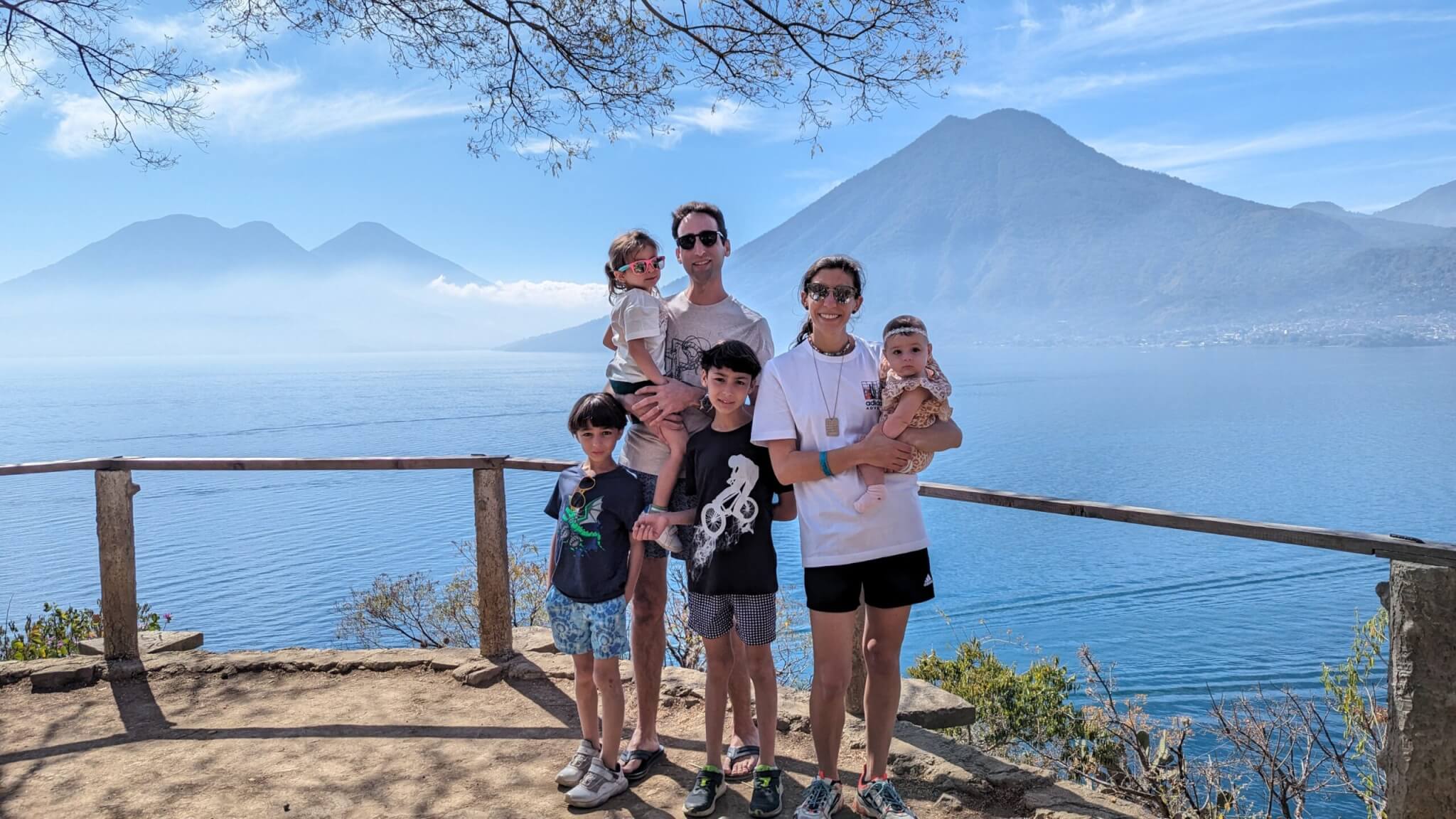
Our adventure continues in Lake Atitlan. We hired a driver to take all of us and our luggage from Antigua to Panajachel. We chose to stay in Pana because it was the most convenient for driving to/from other cities. Once in Pana, we would be able to take the boats across the lake to the different city ports. Lake Atitlan is one of the most beautiful places in Guatemala, often compared to Lake Como in Italy. It was formed out of a volcanic caldera, and has three major volcanos around the lake – some still active. On the far (Western) shore, are San Pedro, San Juan, and Santiago Atitlan which are Tz’utujil Mayan, and the Eastern side has Panajachel and Santa Catarina which are Kaqchikel Mayan.
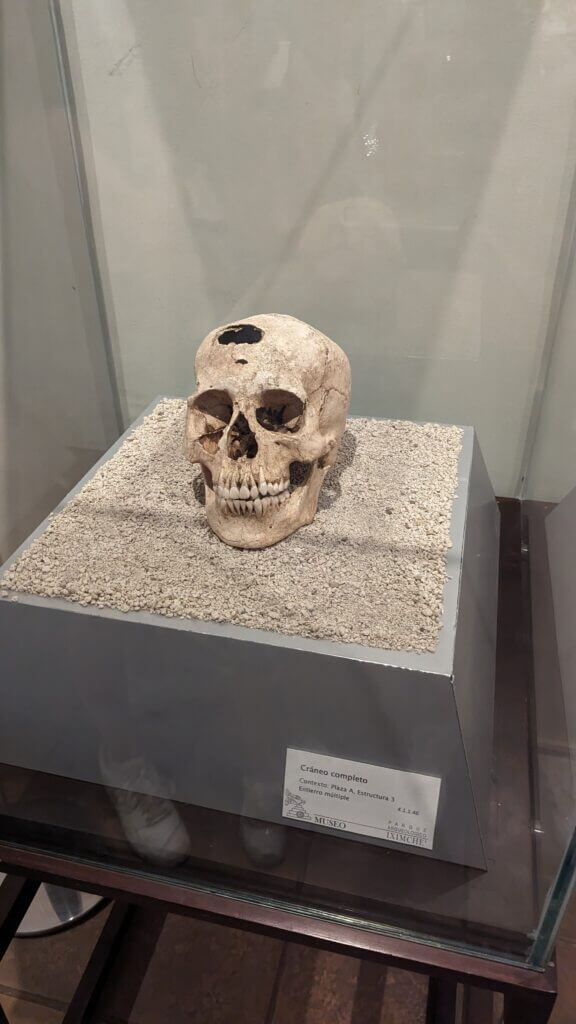
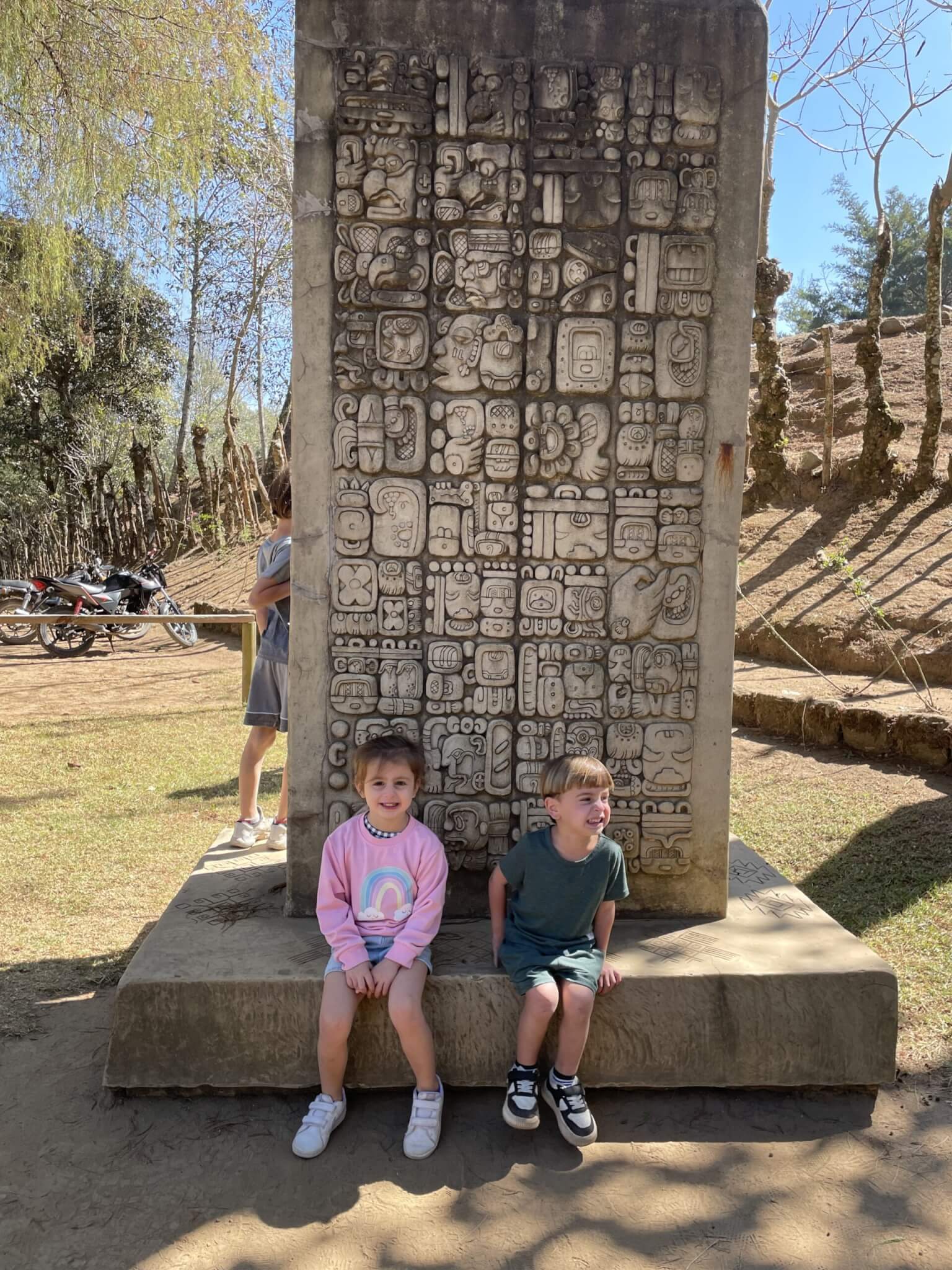
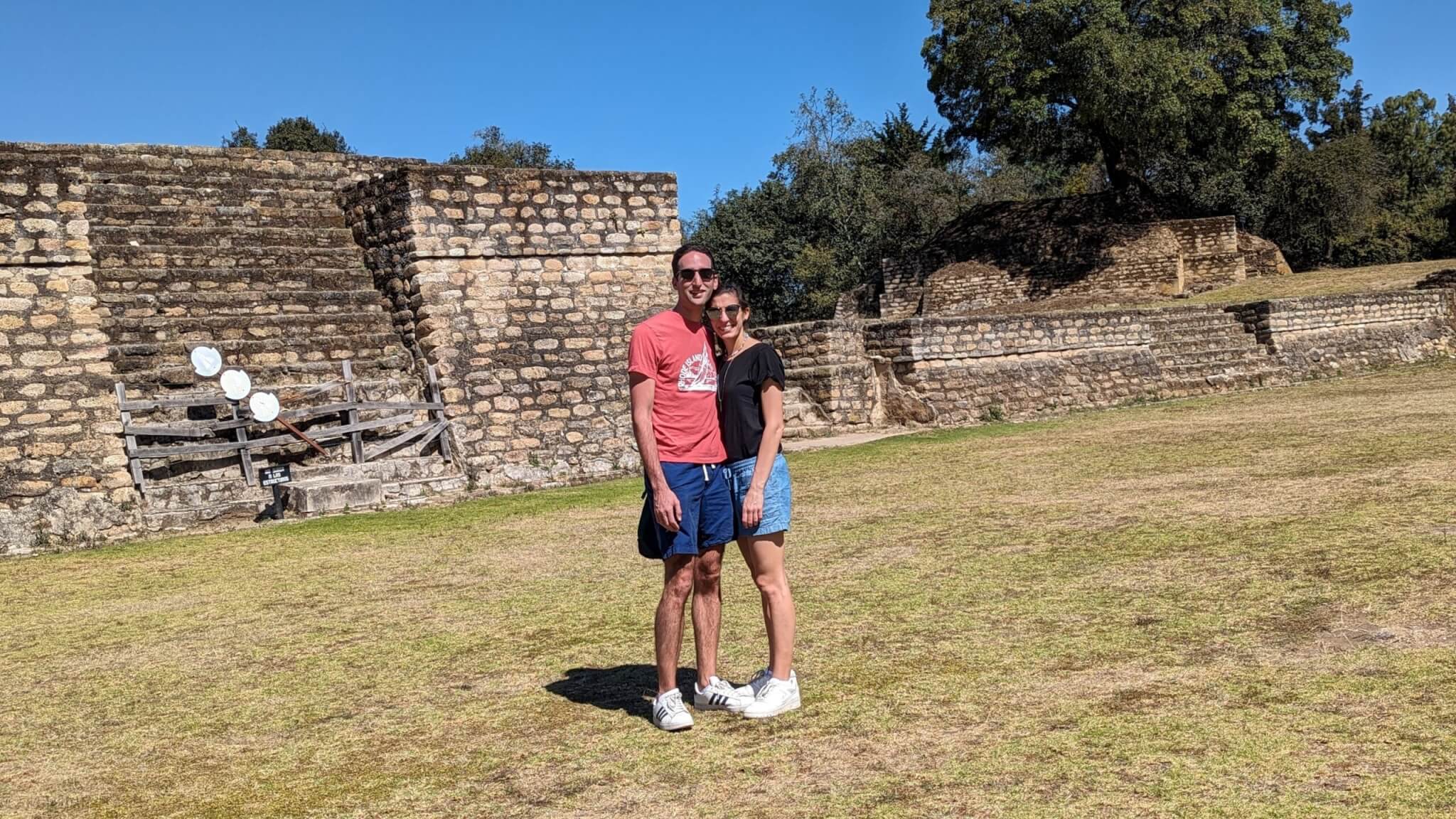
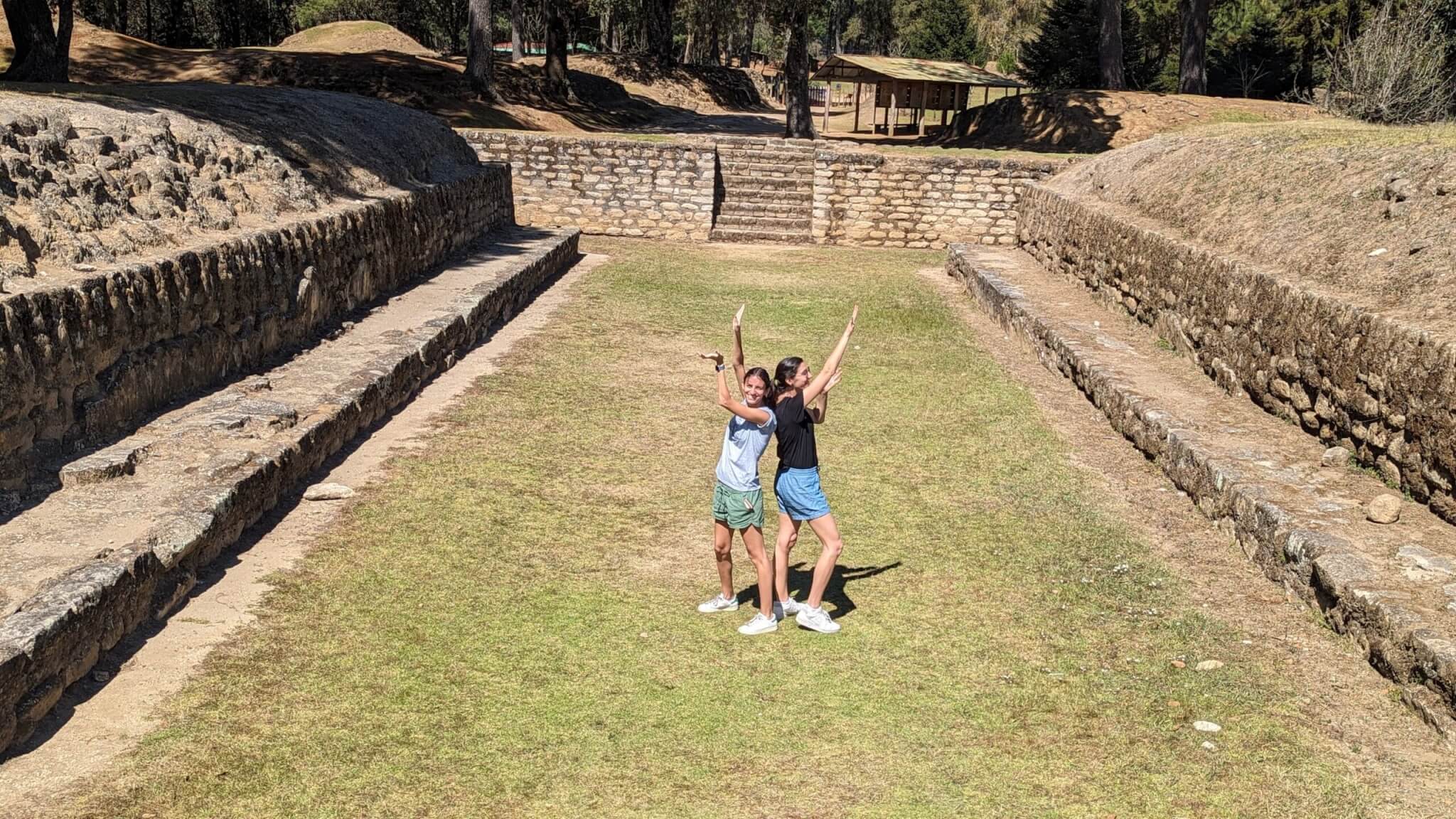
Iximche – On the way to Pana, we stopped in Iximche, an ancient Mayan city. It’s about a 1.5 hour drive from Antigua. Once we got there, we paid our entrance fees (50 Q per person) and met our guide, Melvin. Before entering the site, we visited a small museum with a reconstructed city plan and several artifacts. Melvin explained to us how Iximche was built in 1470 and served as a city for 400-500 of the important officials who led the surrounding Cakchiquel community. Remains include temple walls, palace walls, city fortifications and a basketball court. The area is organized into Zones A, B, C, D, and E. Only zones A, B, and C currently have remains. Iximche was eventually abandoned and overtaken by the Spanish conquistadores in 1524, predominantly by smallpox. Although Allen and Joseph were uncooperative, we enjoyed seeing this historical site and learning about the Mayan history.
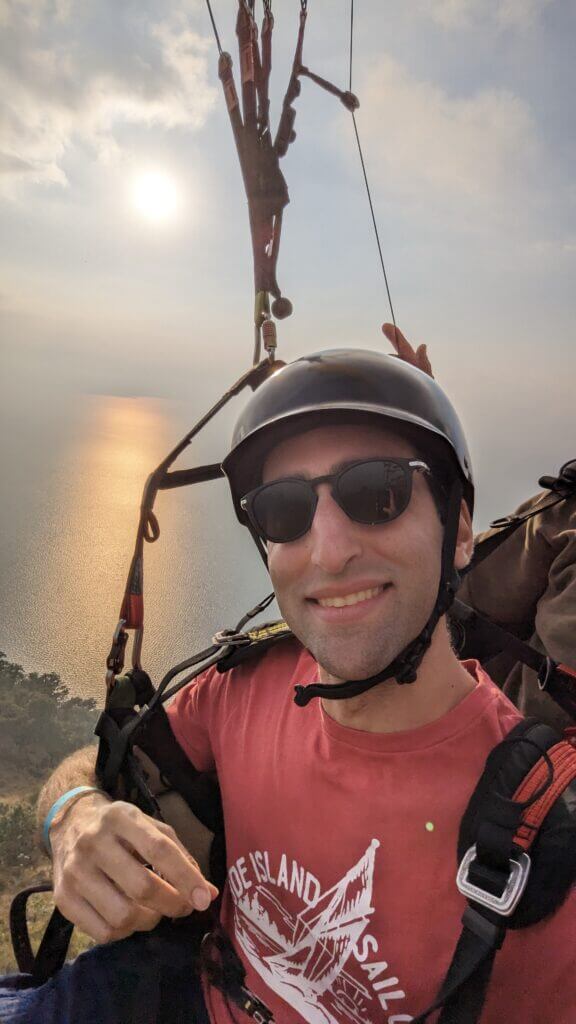
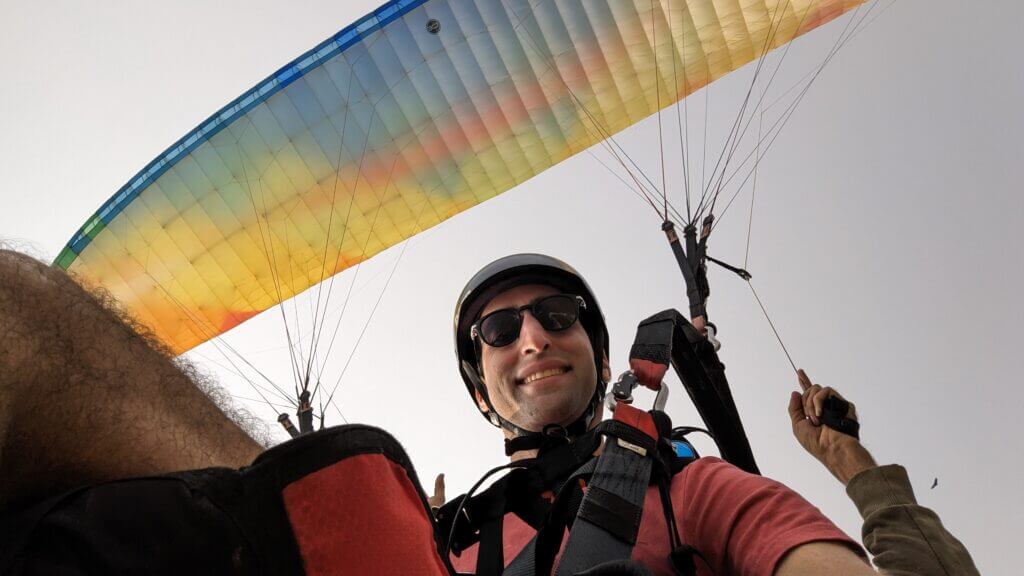
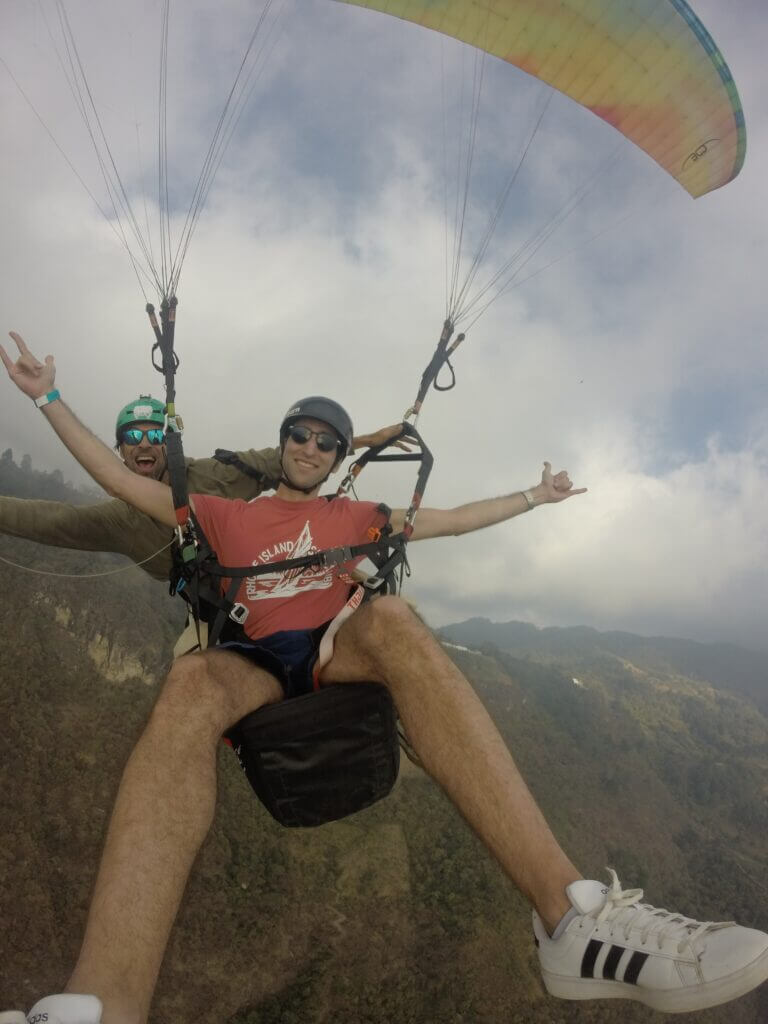
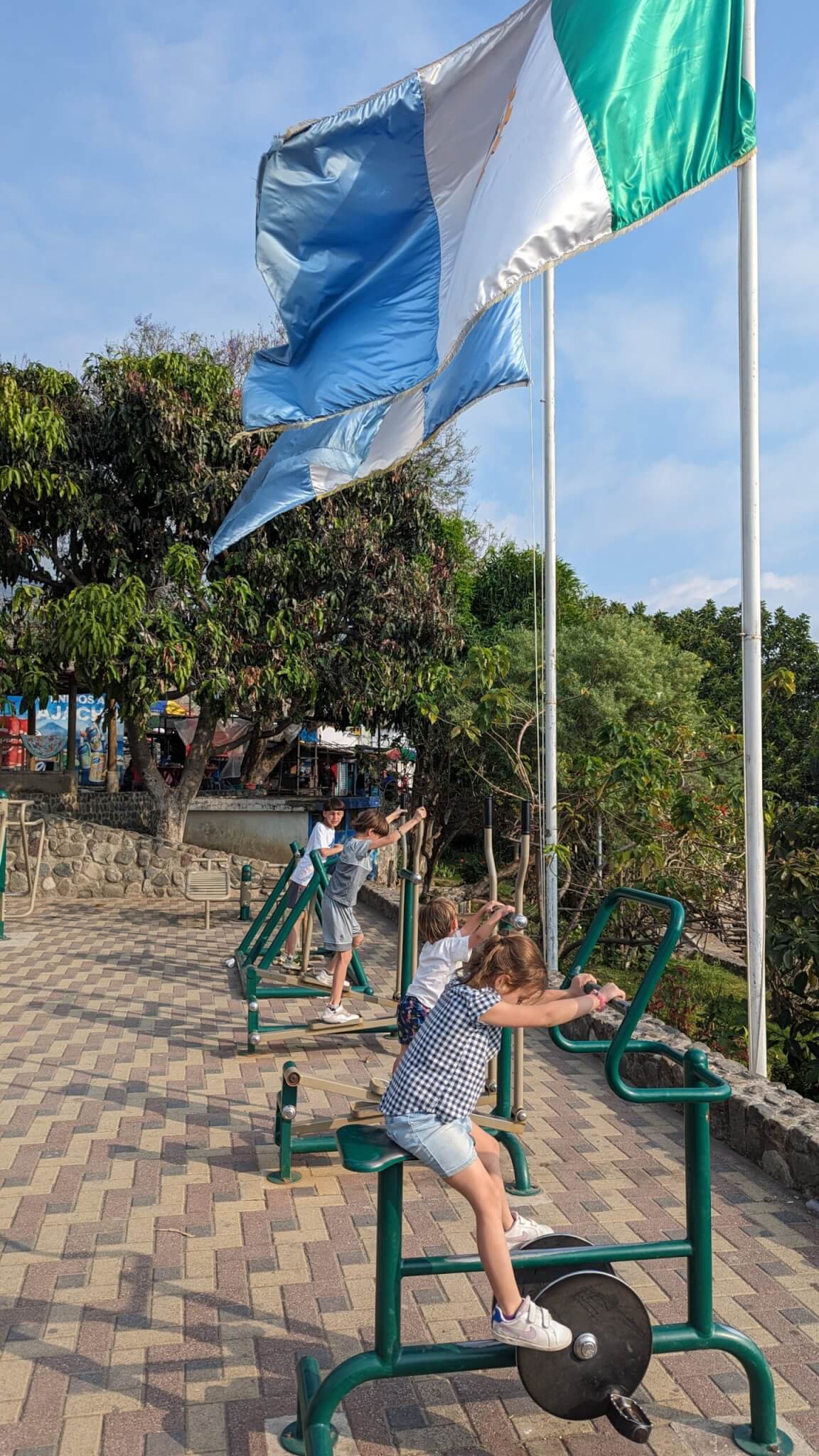
Panajachel and Paragliding – After Iximche we continued on a twisty, curvy road and reached Pana about 2 hours later. Our hotel felt like a real resort compared to the surrounding area. We spent some time relaxing and swimming by the pool. Sam insisted on going paragliding and left us alone to enjoy his adventure. Paragliding was very cool and quite complex as the pilot has to study the wind to find areas to get lift. The experience was thrilling and although visibility was low, the conditions allowed for great flying. Sam chose to go with RealWorld Paragliding as they had the reputation as safest and most experienced. He spent an hour in the air and even got to do some freestyle along the way. Once we finished the pool, we spent some time walking around the streets of Pana, visiting some marketplaces and getting a feel for the area. The kids enjoyed a few minutes as a local “playground” near the dock.
Wednesday
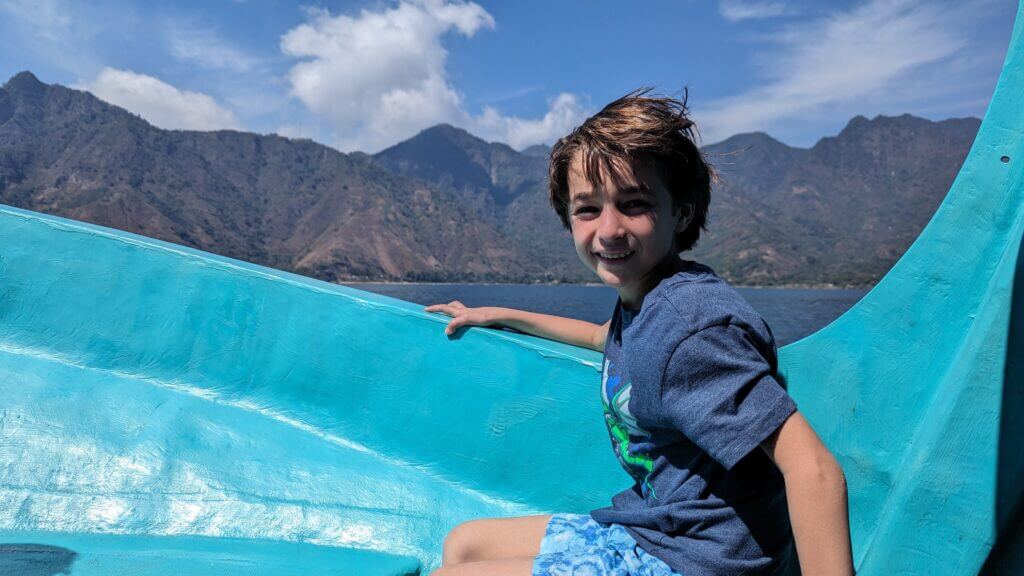
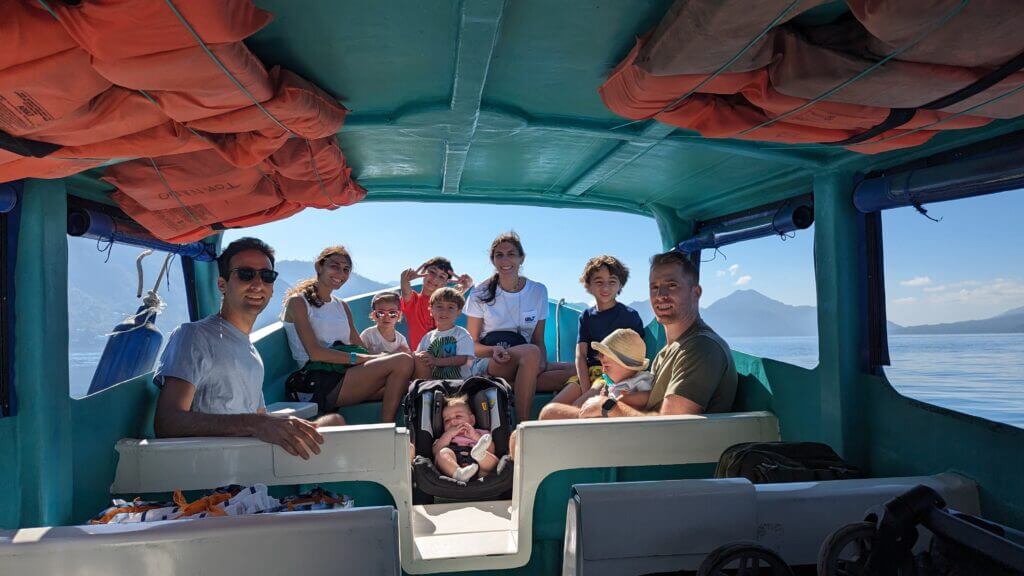
We were told that a trip to Guatemala would be incomplete without visiting Lake Atitlan and it’s definitely true! We arranged a tour with Alex, whose information Rita found on the Jewish Girls Travel Forum Facebook group. (Shoutout to them- their advice was super helpful in planning this entire trip!!) Last minute, Alex switched the plans and had one of his guides, Gespard, work with us for the day. Traveling with so many people, especially so many kids, we felt it was important to spend a little more for better peace of mind during the day. For $250, we hired a private boat that stayed with us for the entire day and transported us from village to village. It also included the tour guide services. We also hired a babysitter to help us as an extra set of hands with all of the kids. If you are traveling with a family, we definitely recommend this!!
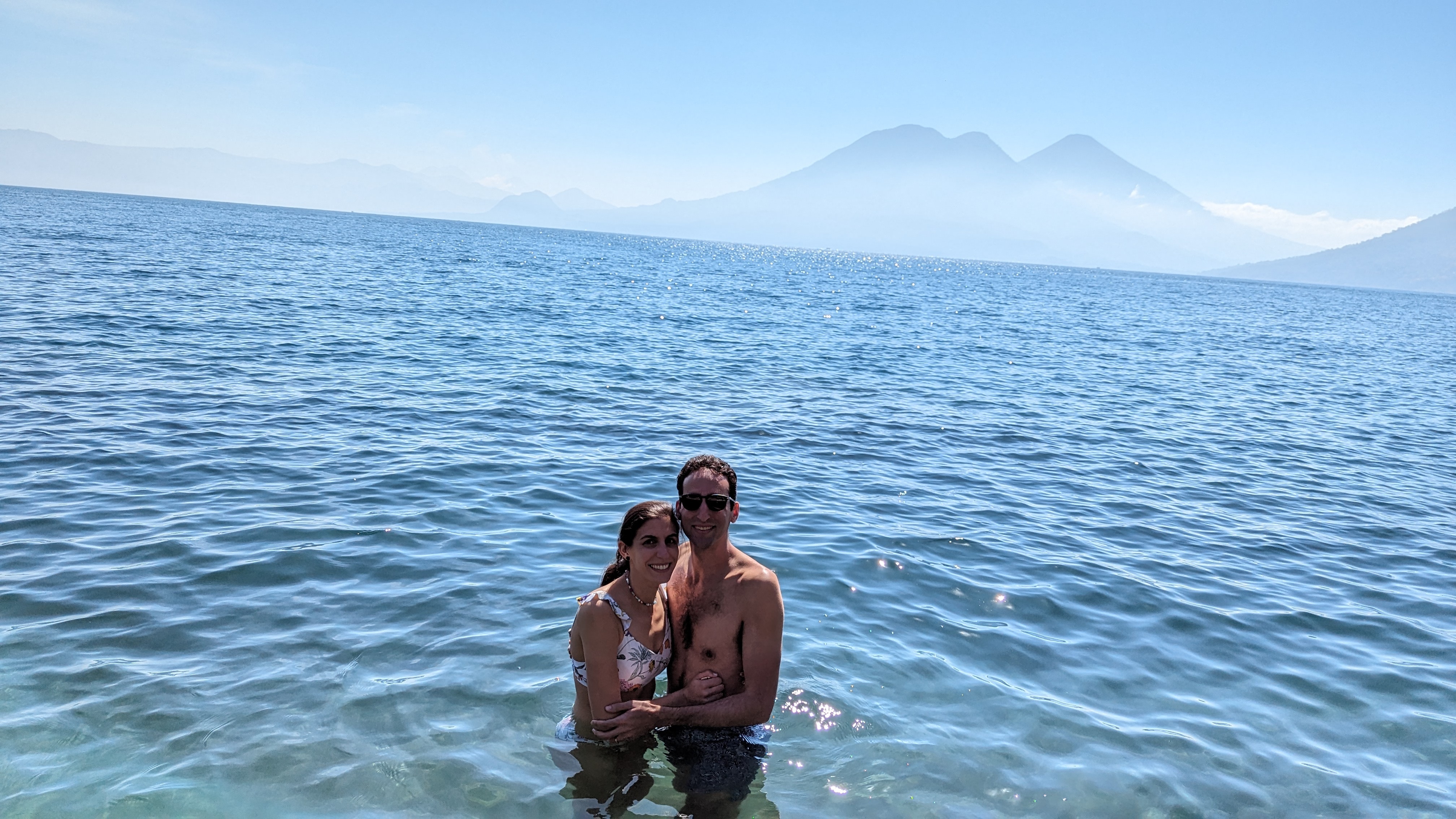
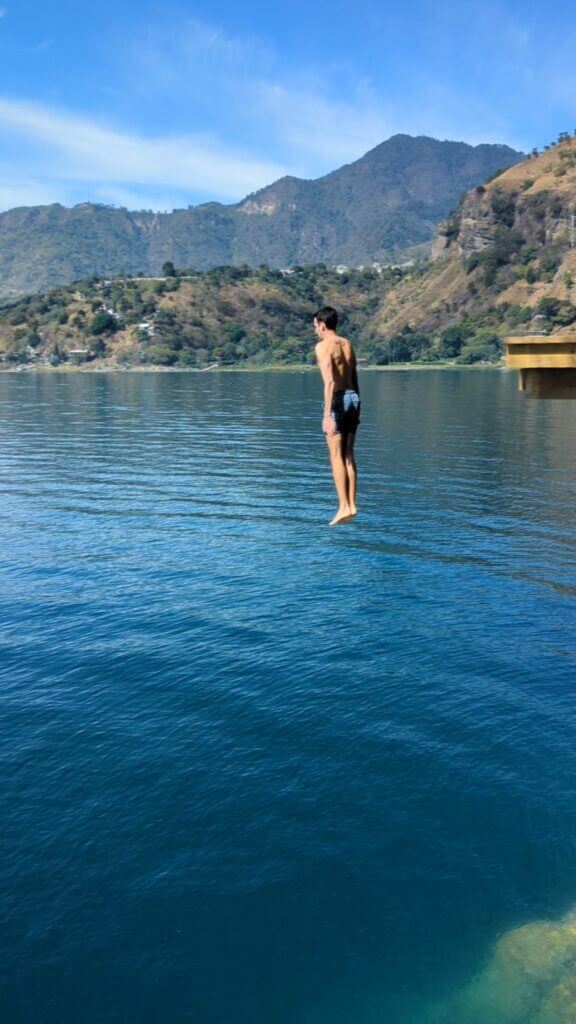
San Marcos la Laguna – Sam read that this village had a cliff jump and insisted that we go there so that we could swim in the lake. After a short stop at a beautiful viewpoint, we made our way to the cliff. Once we were there, Sam hesitated a few times, but ultimately made the scary jump into the water. Zeke followed with a perfect form jump. It was thrilling and exhilarating and a small crowd gathered to watch. Afterwards we all swam for a little by the dock.

Santiago Atitlán – This town really gave us a feel for life of the ordinary Guatemalans. We saw tons of street vendors and women selling groceries. As usual, there were many stray dogs roaming the streets. Although Rita is still petrified of them, she definitely got more comfortable walking around the dogs. The green mango with salt and lime was delicious! The kids also enjoyed the orange mango. Zeke found a weaver who spoke Hebrew and made him Am Yisrael Chai pens – too bad that Zeke actually wanted bracelets, but more about that later. Santiago is the historical capital of the Tzutuhil Mayan people and we were able to learn about their culture here. We saw how the women wrapped her hair in a thread (to symbolize the Mayan snake) and ultimately created a headpiece out of it. We also stopped at a traditional worship house where they were worshiping by smoking, lighting candles, and burning incense. After a brief walk through town, we then headed back to the lancha to go to San Juan.
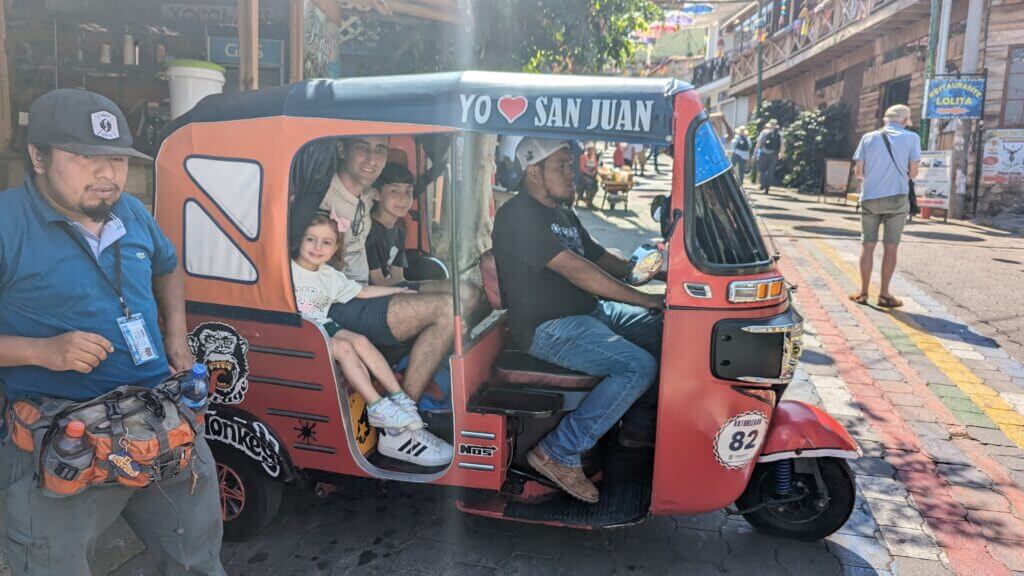
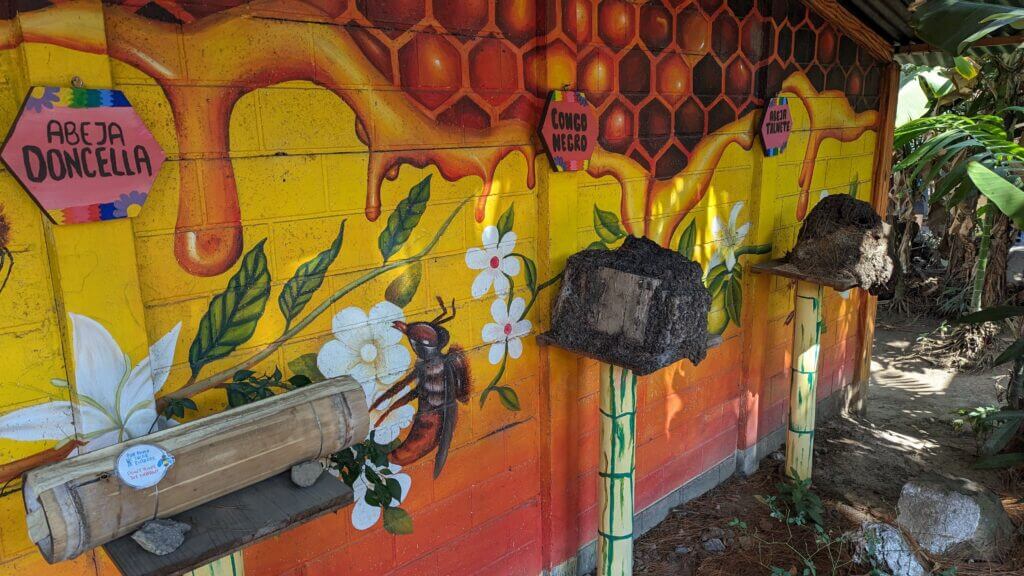
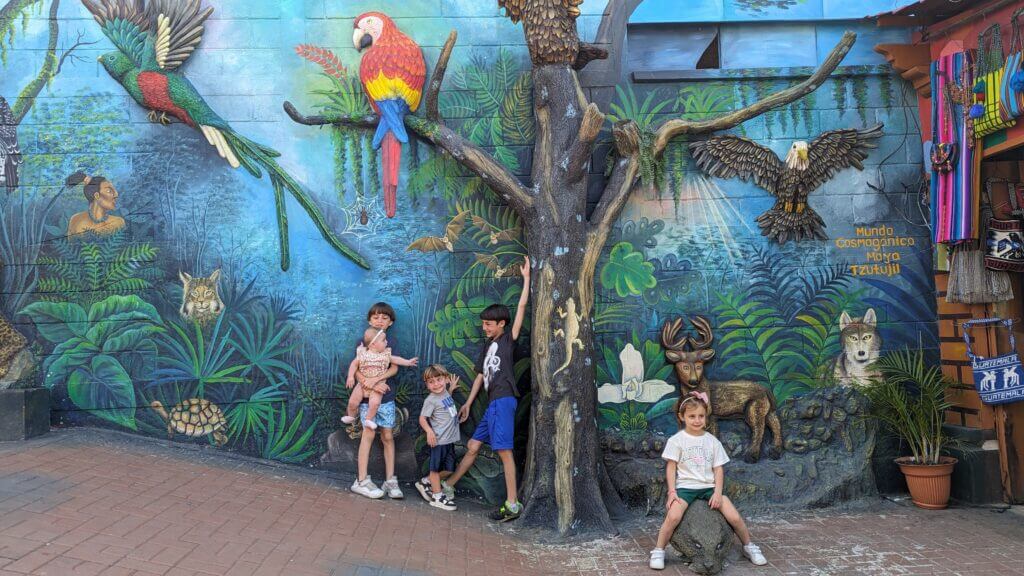
San Juan La Laguna – Our first tuk tuk experience! The tuk tuk is like a miniature taxi covered with a cloth roof with no doors and open sides. 3 people can fit in the back. The driver is in the middle of the front row with 2 potential spots on either side. We took the tuk tuk up to the top of the village and walked our way down. The first stop was a Mayan bee farm. Mayan bees are smaller than other bees and don’t have a stinger, although they can still bite. We looked at several different bee colonies and sampled some honey, including black honey. (BTW, these tours are all very quick, about 10-15 minutes, similar to the pueblitos in Antigua.) Next, Gespard taught us how they make coffee. We sampled the coffee plant fruit, which is actually sweet and juicy. The coffee plant gets picked 3 times a season once they are ripe. Once picked, the red beans are separated from the green ones. The bean gets removed, dried out and eventually ground into coffee. We continued our visit by walking through the artist’s colony, which has many giant murals and art installations. Next we visited the Mayan women’s cooperative, where we got a demonstration on how the women turn cotton into different types of clothing. We learned that they use different plants, fruits, and natural ingredients to dye the white cotton many colors. All of these demonstrations made us appreciate how much time and effort goes into the work of making food and clothing. We then hopped into another tuk tuk and headed to San Pedro, a village connected to San Juan. (Every time we saw a tuk tuk, all the kids shouted “tuk tuk.” They really were exposed to a very new and different culture.)
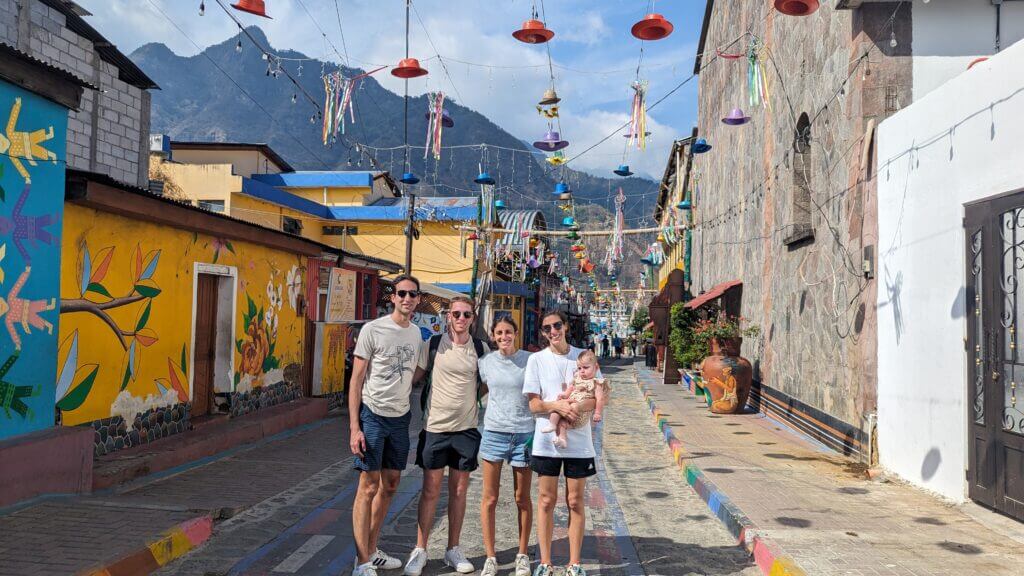
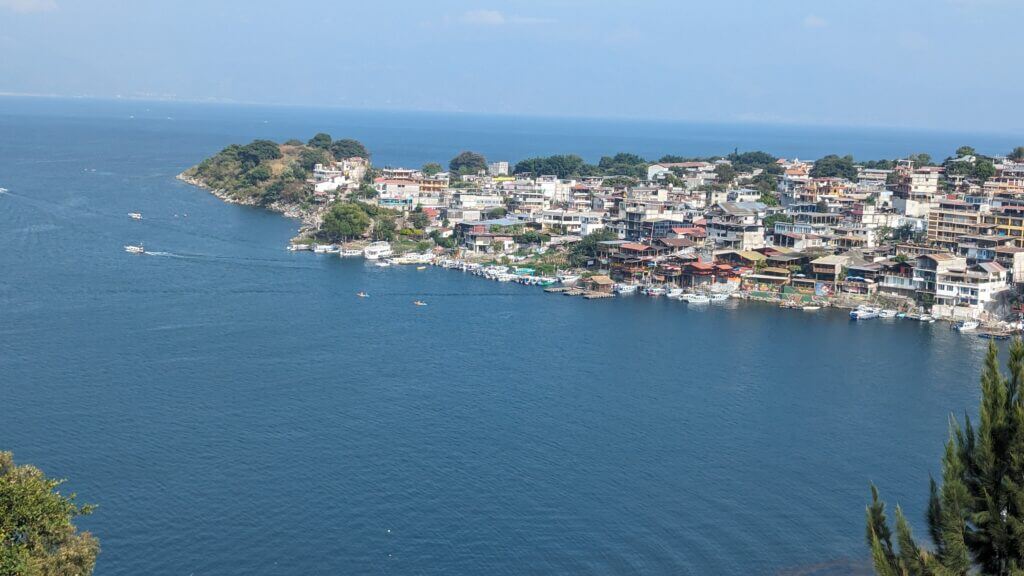
San Pedro La Laguna – We stopped at a nice lookout point and saw the entire harbor. We then walked around the village before getting to Chabad of San Pedro. We loved spotting random stores with Hebrew words and overhearing people speak Hebrew. For example, Joseph saw a dog coming near Rita and said “Don’t worry Mommy, it has a leash; it’s a nice dog. And the man walking with the dog says הוא צודק. The Chabad here had a very different vibe than Chabad Antigua. There were two restaurants here – a falafel / schnitzel stand and a dairy one. The Chabad house was smaller, but just as welcoming and friendly. We ate some dinner and ordered some food for the next day. Our lancha then met us at the dock and took us back to Pana around 6 PM. It was a full full day, but a very fun one!
Thursday
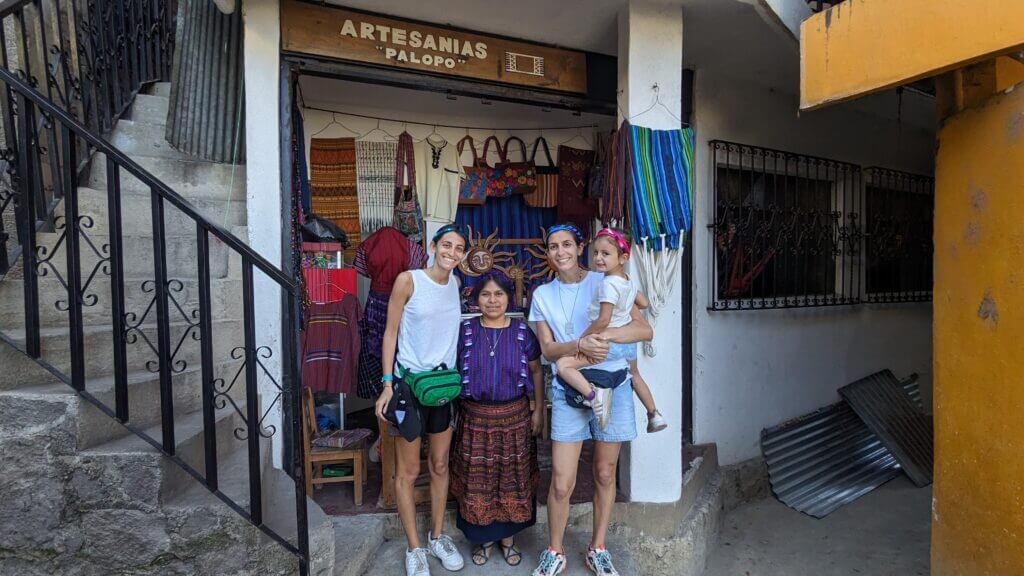
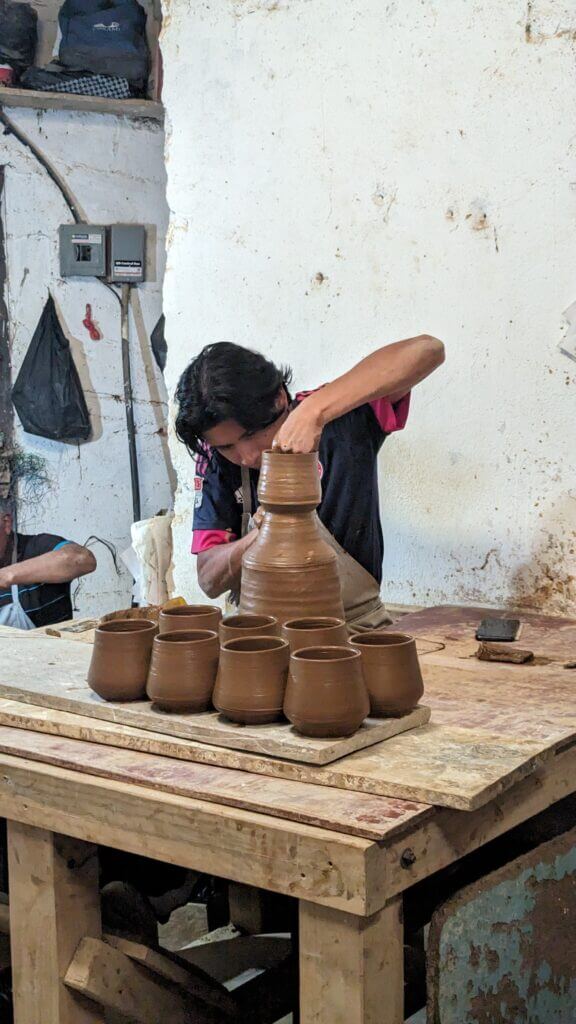
San Antonio Polopó – We had enough time that we visited more of the towns surrounding Lake Atitlan. We took a lancha to San Antonio, where we had a chavaya trying a traditional hairstyle. We walked around the town, which seemed less built up than some of the other towns until we hit the ceramic factory. We watched a potter shape clay and other people sand it and paint it.
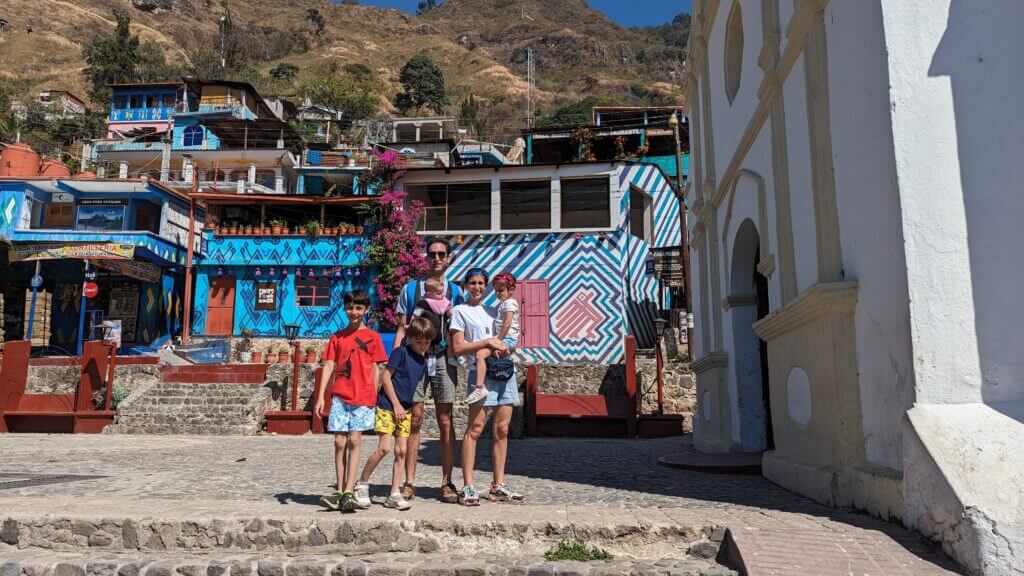
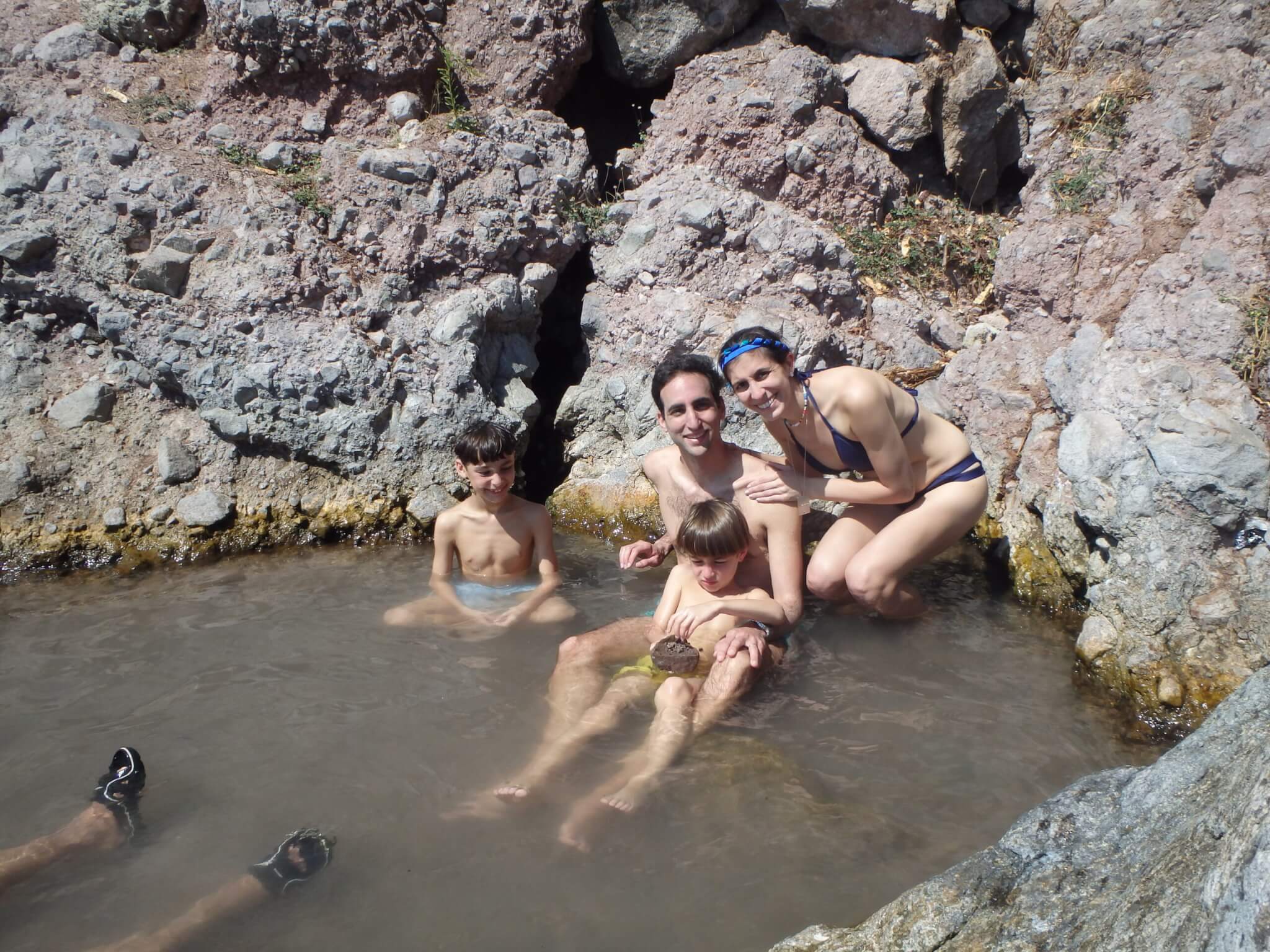
Santa Catarina Polopó – The next stop had pretty blue houses and buildings. We went to yet another women’s weaving cooperative. By this point, we were pretty exhausted of them. We ended this visit with a trip to the thermal springs, naturally hot pools. The trip down to the water was pretty rocky and difficult to maneuver, but we enjoyed the water once we were inside. The water was extremely hot coming out of the rocks along the shore of the lake.
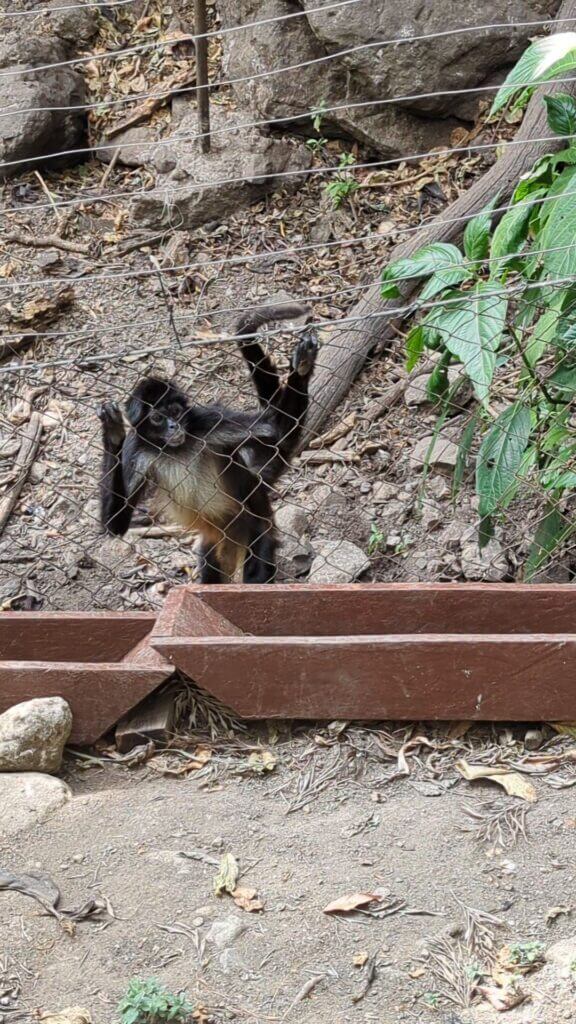
Reserva de Atitlán – While researching, we weren’t sure we needed to visit this site. But we kept being told that it was a beautiful natural oasis and worth a visit, especially to see the monkeys. We saw butterflies, a few monkeys swinging from trees and walked around the nature trail, but it was nothing special. We ended the day with a swim by the pool and one last walk around town. Afterwards we began the journey home, starting with a 3+ hour drive to the airport.
Guatemalan Culture
One of the highlights of the trip wasn’t any particular activity we did or place we visited, rather seeing everyday life for the locals around Guatemala. As the tourist infrastructure wasn’t extremely built up, we got to visit areas that were authentic. We rode in the back of a pickup truck, ate desayuno tipico, saw the locals shopping in outdoor markets, carrying babies on their back, doing laundry in a communal water pool, and riding chicken busses. The murals, basketball clinics, music, dogs roaming the streets, and street food were a glimpse into everyday life. We talked with the local Mayans around the lake, and saw the differences in each villages clothing, colors, and headwear. Seeing how hard these people worked, and how they were able to enjoy life with no excess was really inspiring.